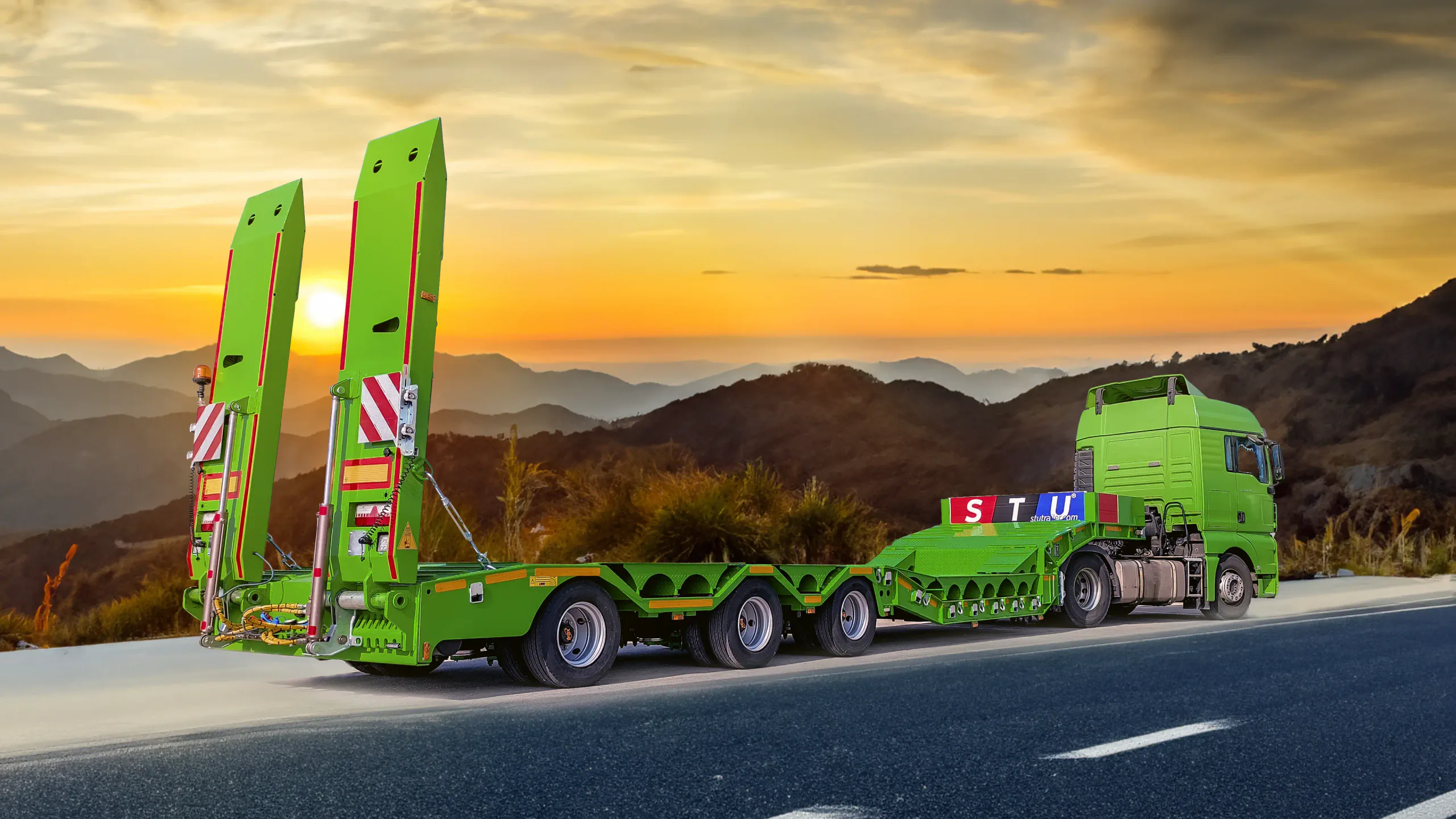
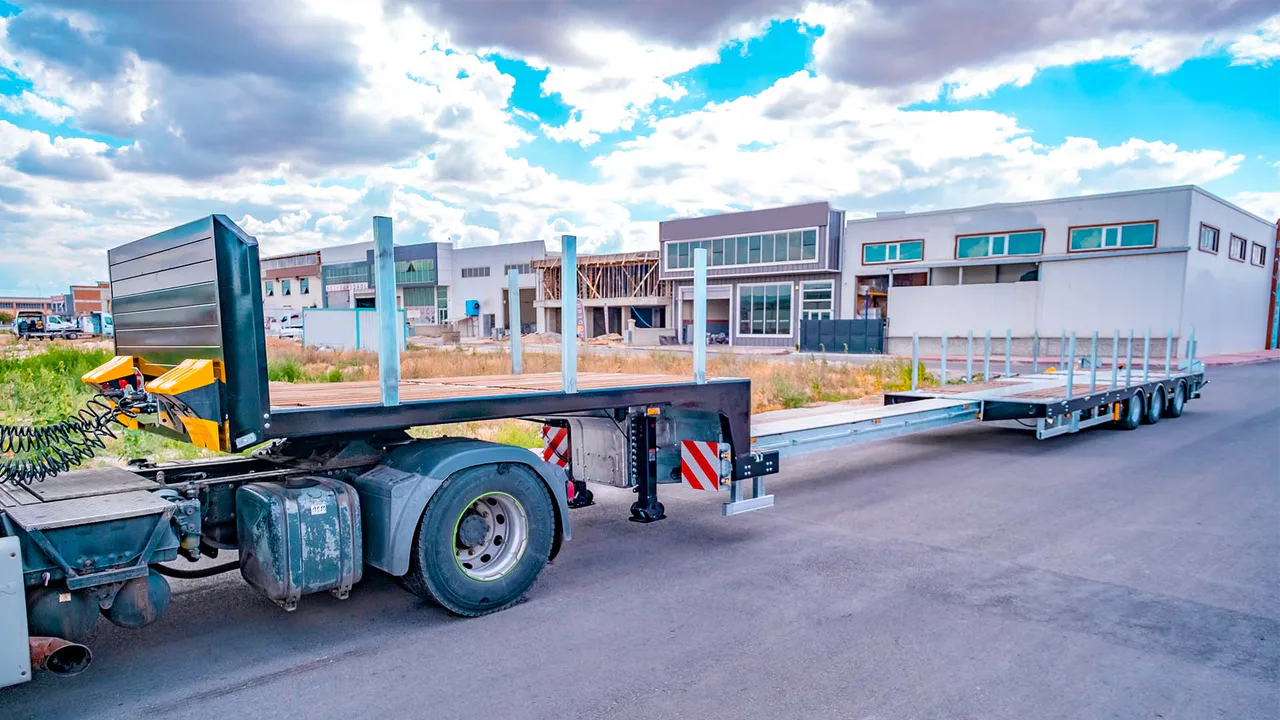
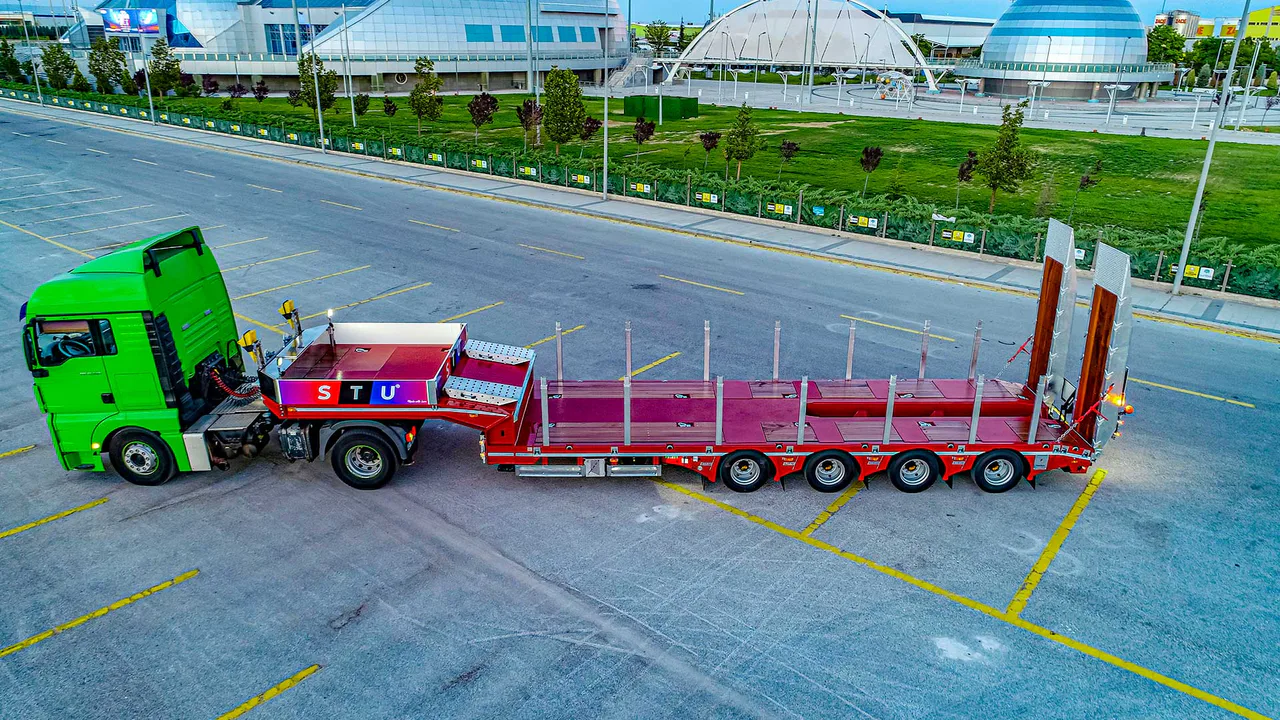
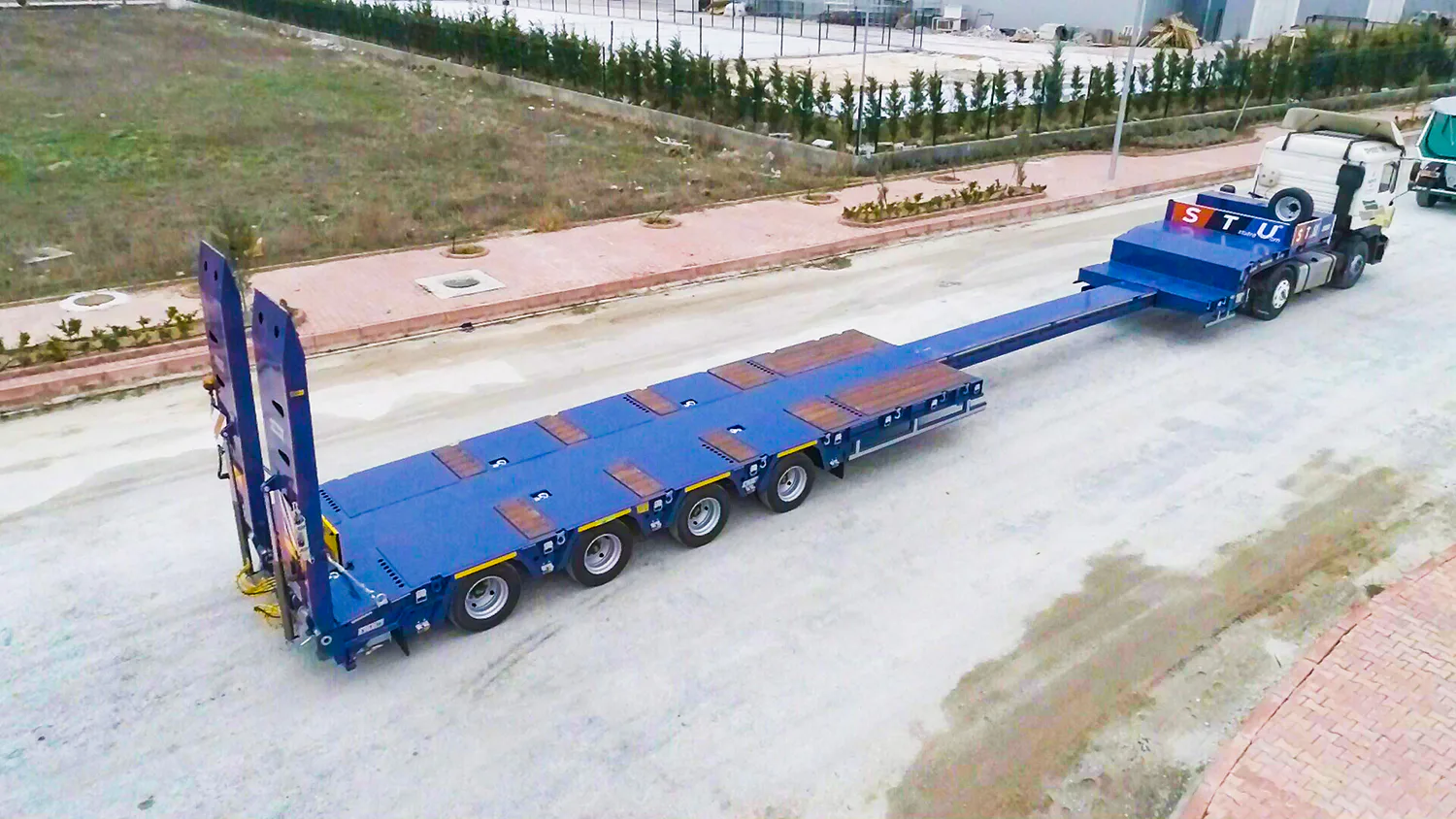
What is a lowbed trailer used for?
A lowbed trailer is used to transport heavy machinery and equipment: such as excavators, dozers, loaders, graders, and agricultural machines, where low loading height and stable road performance are required.
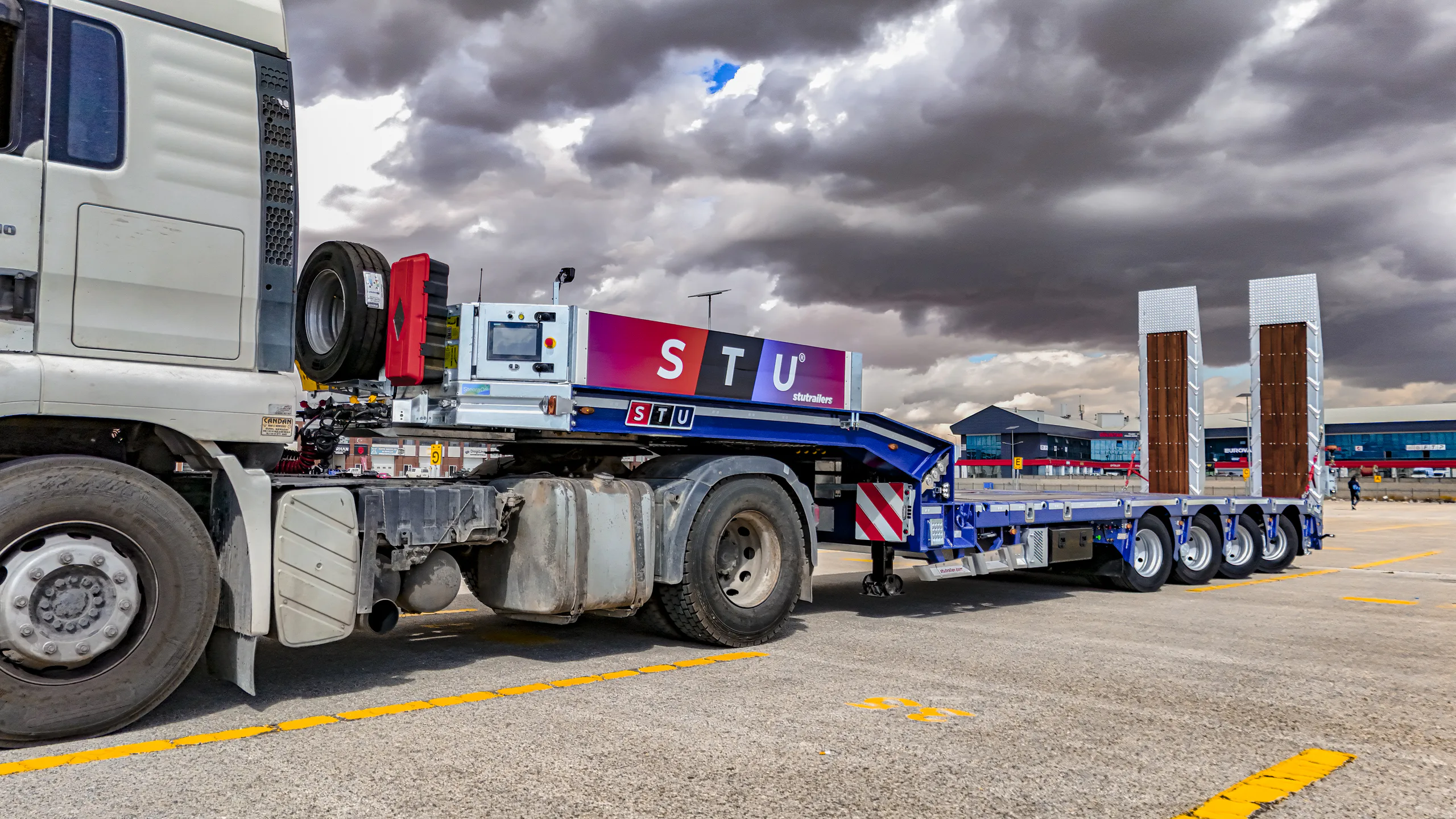
2 to 8 Axles | Fixed or Extendable | Heavy Machinery Transport
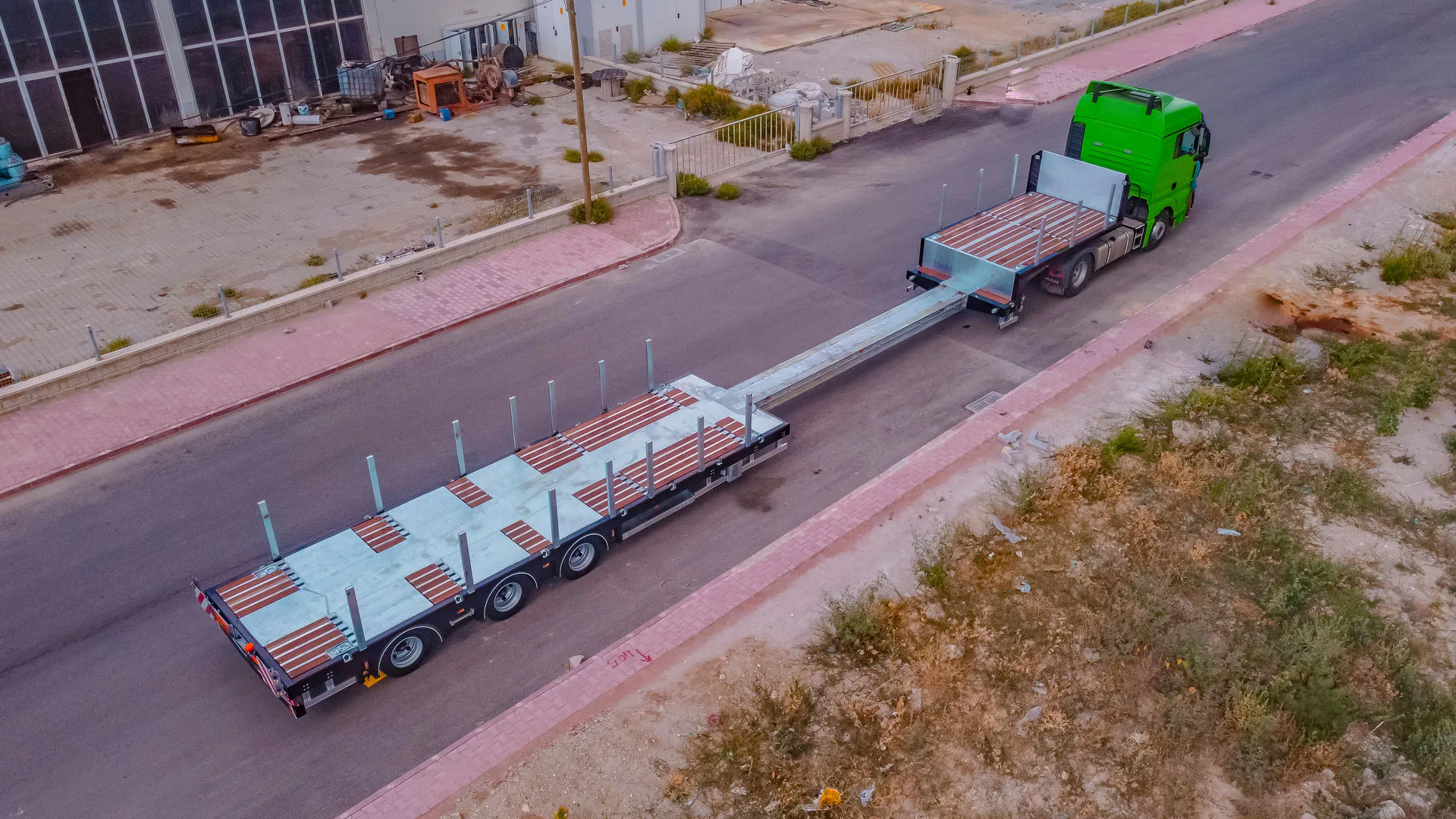
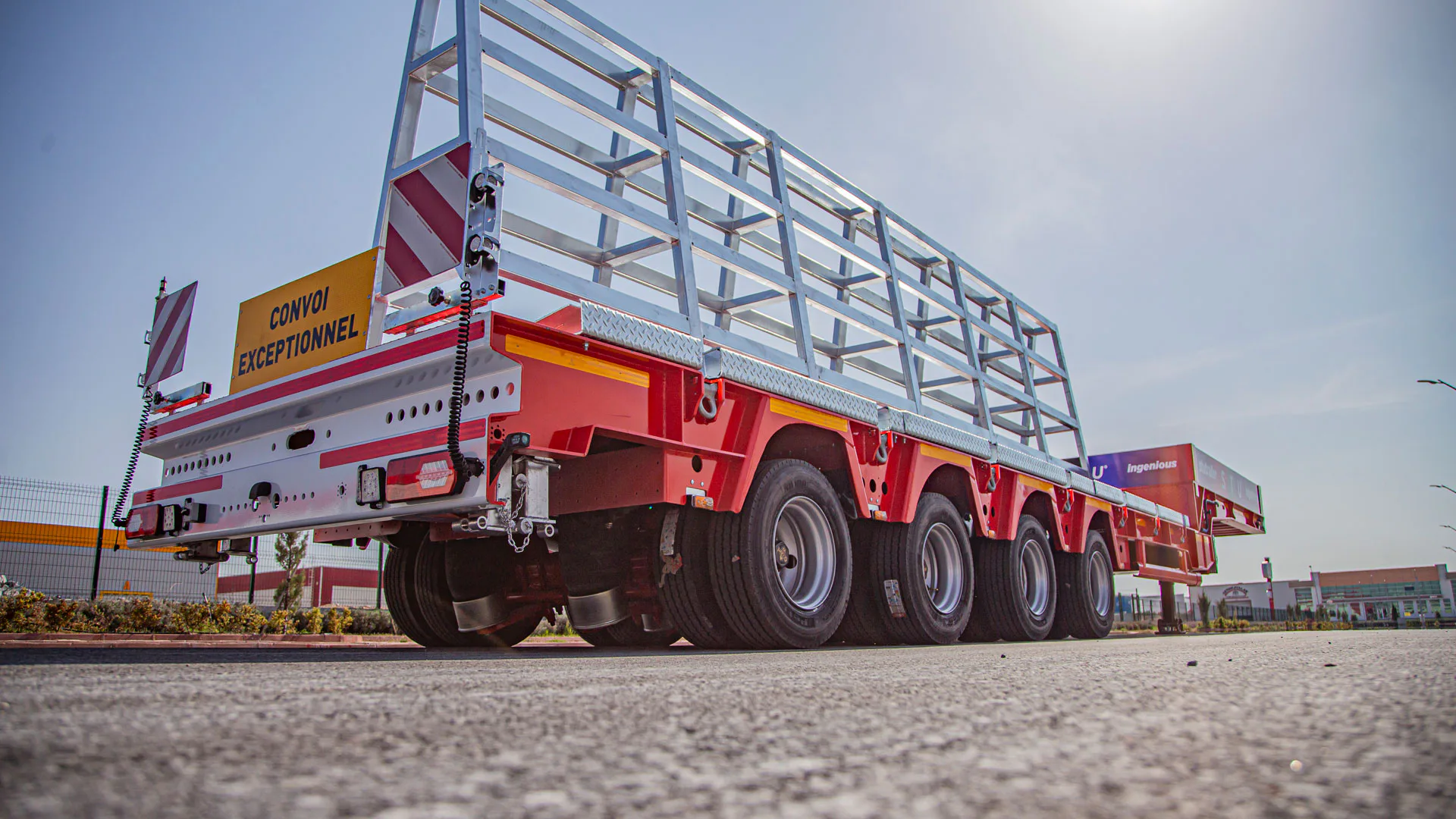
STU lowbed trailers are manufactured for heavy equipment transport: excavators, dozers, wheel loaders, graders, agricultural machines, industrial cargo and oversized loads, where low loading height, rear ramp loading and stable road behaviour are essential. As a lowbed trailer manufacturer in Konya, Türkiye, STU builds fixed and extendable low loader and lowboy configurations from 2 to 8 axles, with axle, suspension, steering, ramp and deck options selected around your cargo, route and market requirements.
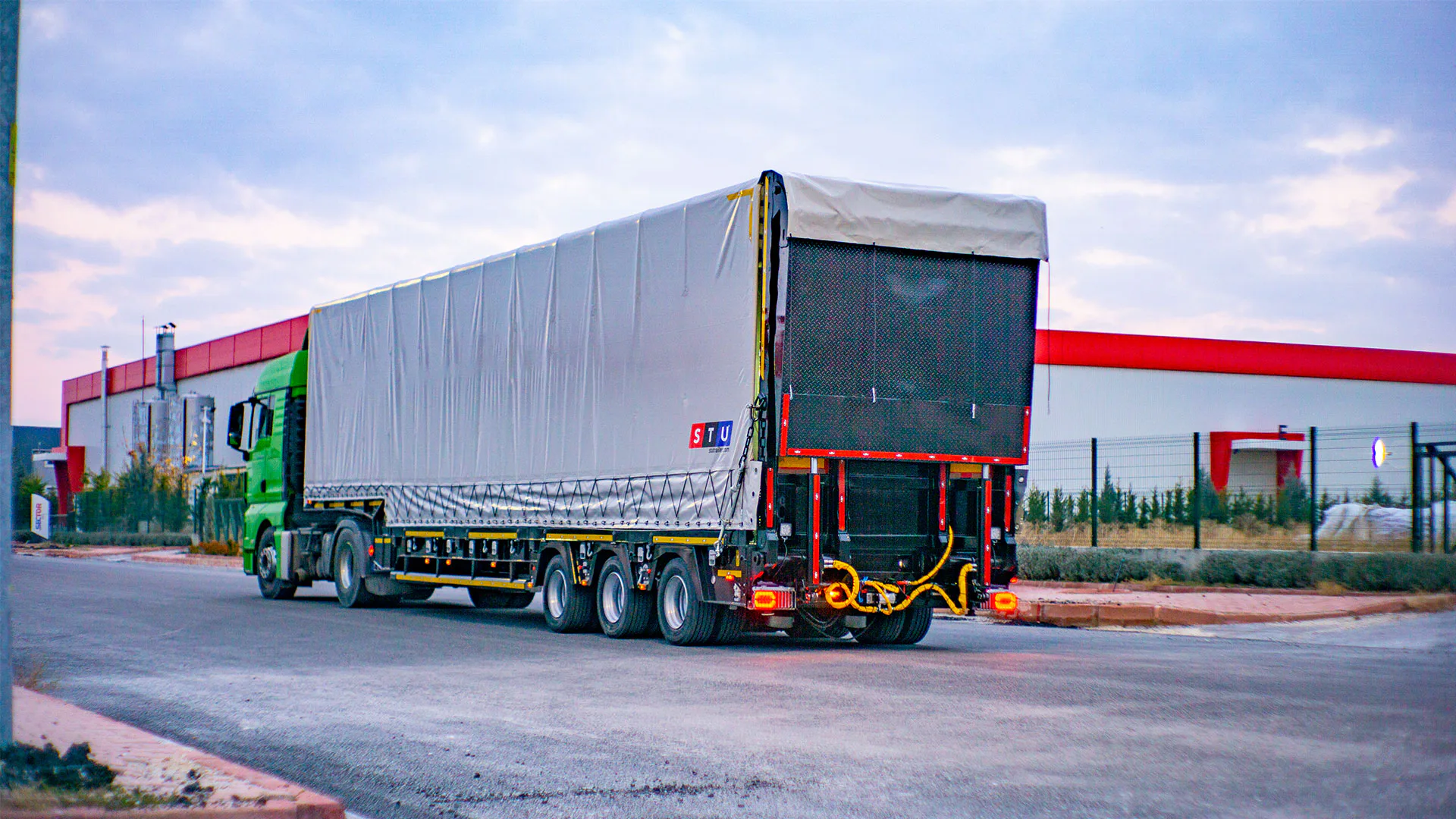
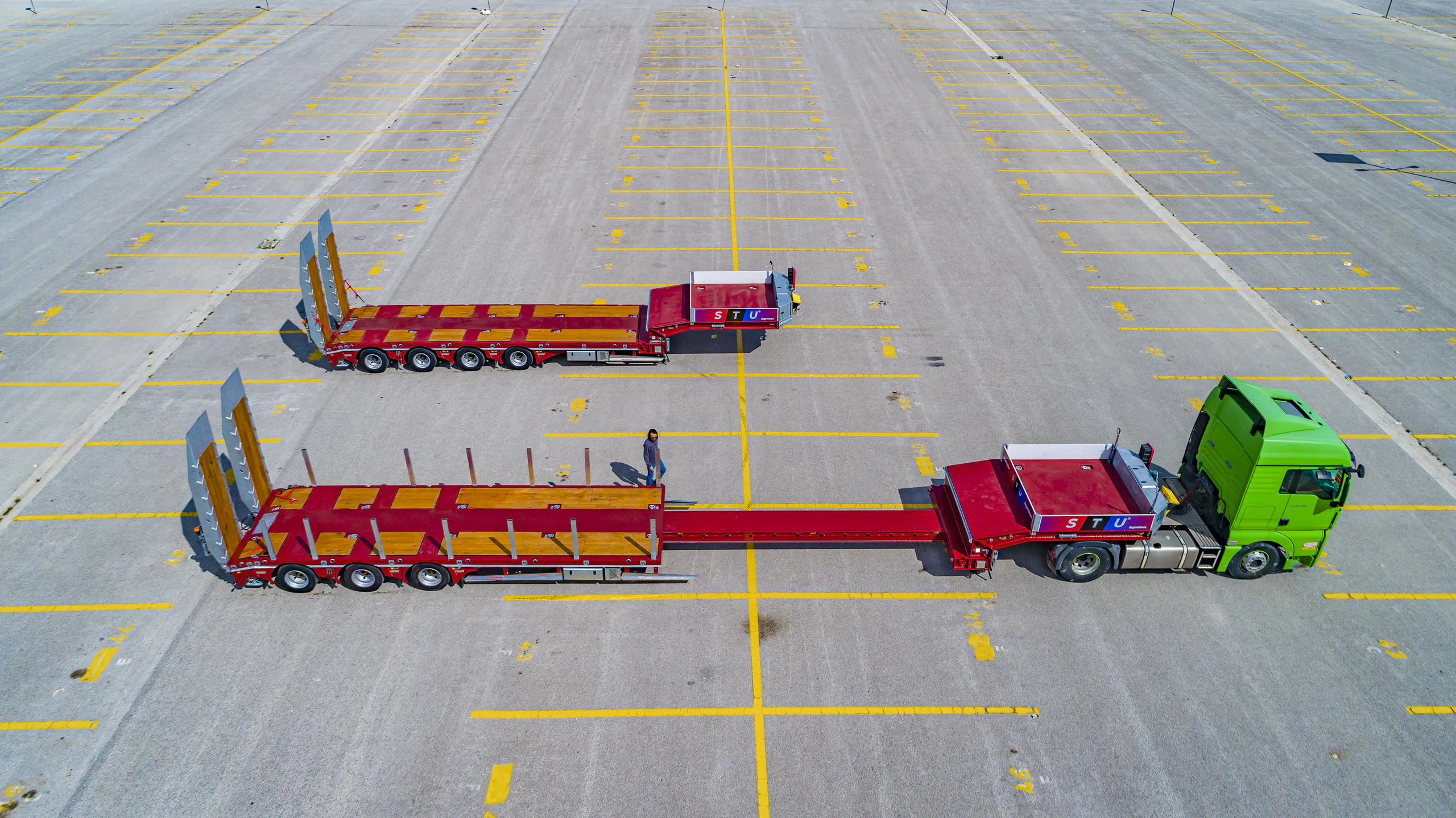
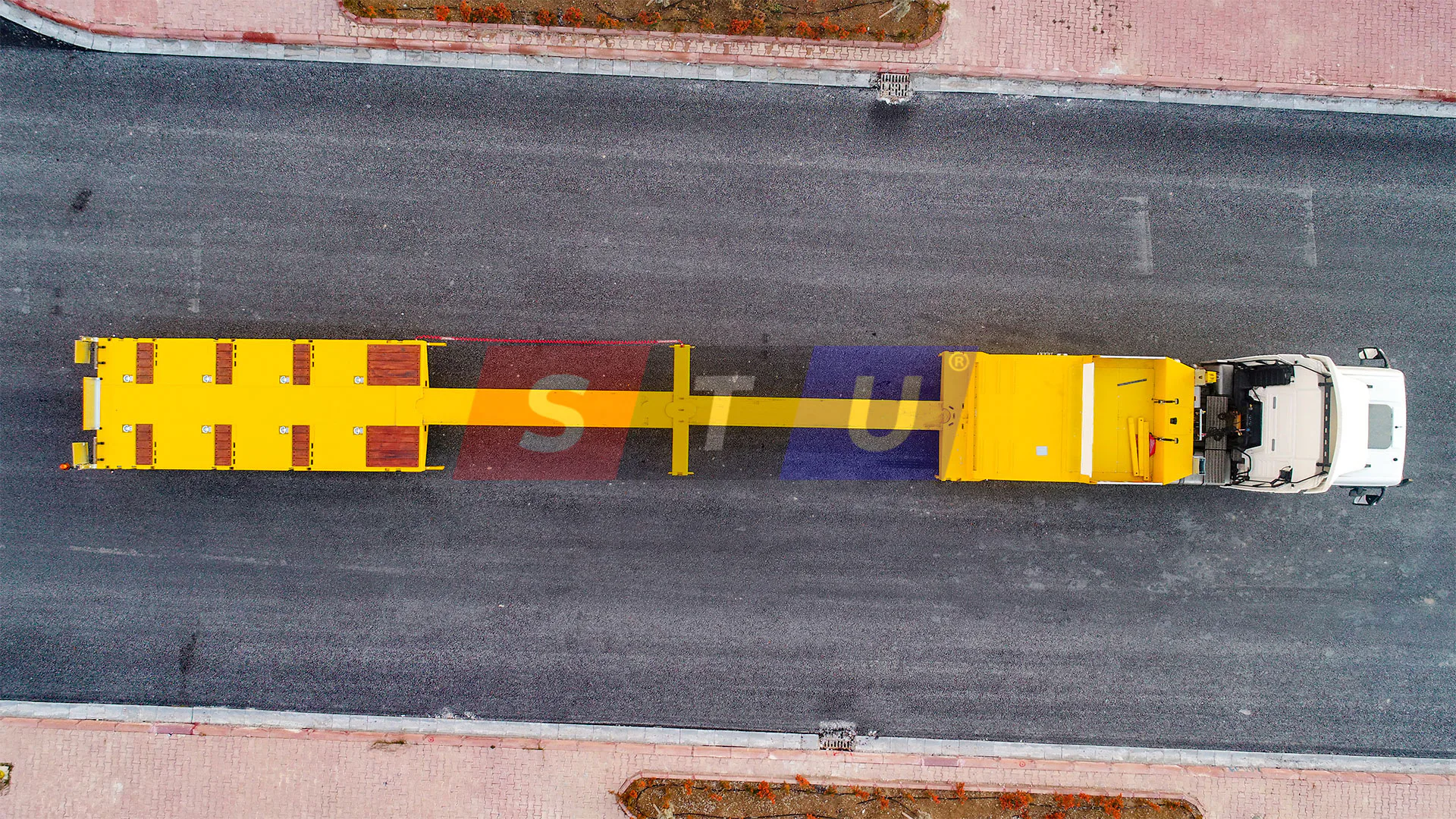
Swipe to browse
The STU lowbed chassis is manufactured around load distribution, axle family, deck geometry and route requirements. Steel selection, gooseneck structure, beam geometry and reinforcement details are evaluated according to the selected lowbed configuration.
Choose S355J2+N for economical standard builds or S700MC PLUS (from SSAB Co.) for weight reduction through stronger steel.
Steel of high strength can be evaluated for configurations where weight matters or special requirements apply where payload logic, chassis strength and tare weight must be balanced.
Axle layout, deck length, ramp type and running gear are selected for the machine being carried and the route it travels, so the chassis, deck and gooseneck are specified together rather than assembled from a fixed build.
Axle, brake, hydraulic, suspension and tyre selections can be aligned with the buyer's market, fleet standard and service network.
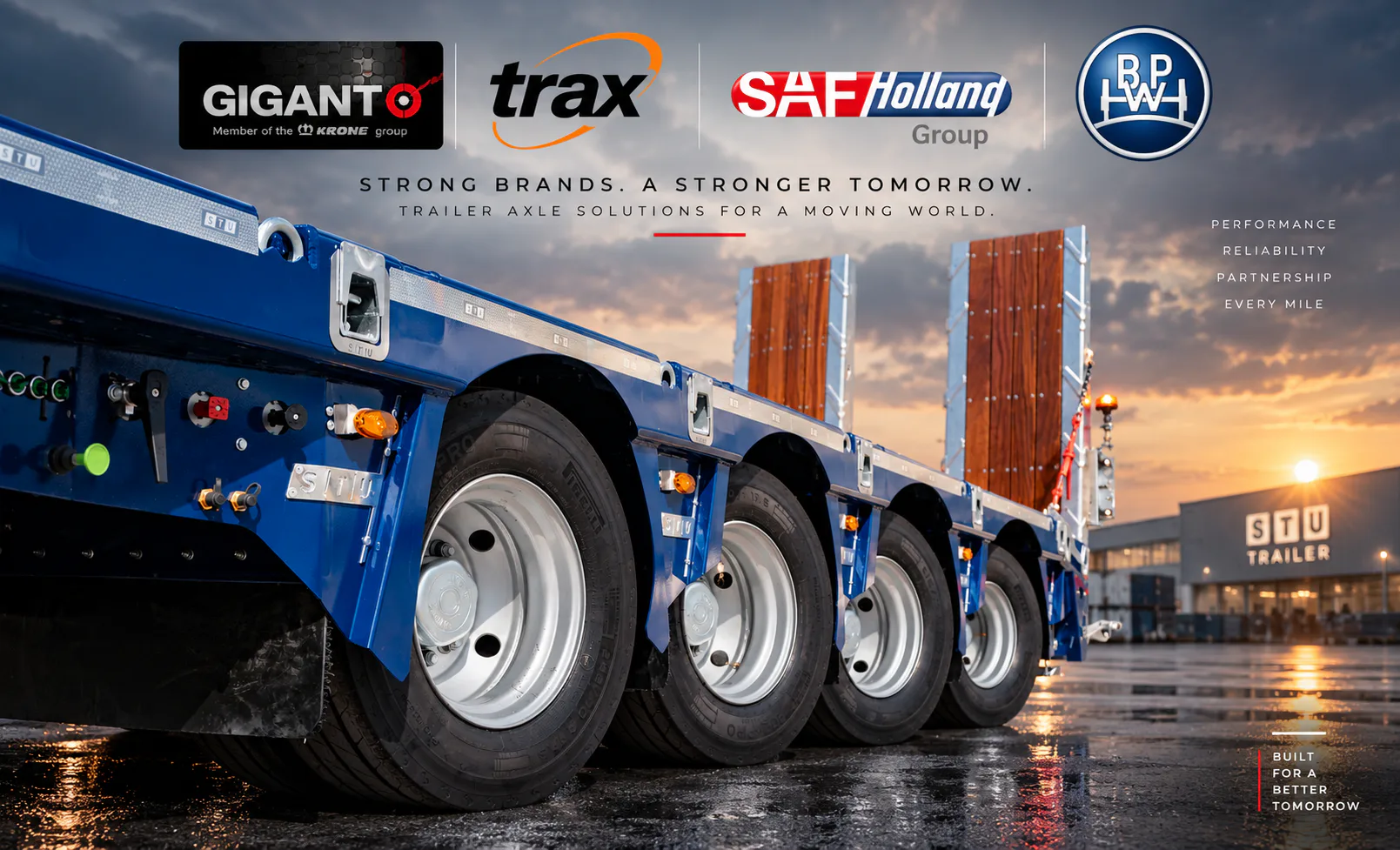
STU lowbed trailers can be manufactured in families with 2, 3, 4, 5, 6, 7 or 8 axles.
A balanced configuration for daily heavy equipment transport, excavators, loaders and regional construction machinery logistics.
More axle footprint for heavier machines, demanding routes and stronger load distribution requirements.
A robust project transport configuration where axle distribution, platform stability and route planning become more critical.
A lowbed configuration offering high capacity for demanding machinery transport and constrained operations.
A maximum multiple axle lowbed solution for oversized machinery and heavy project cargo, engineered according to route permits and legal axle load limits.
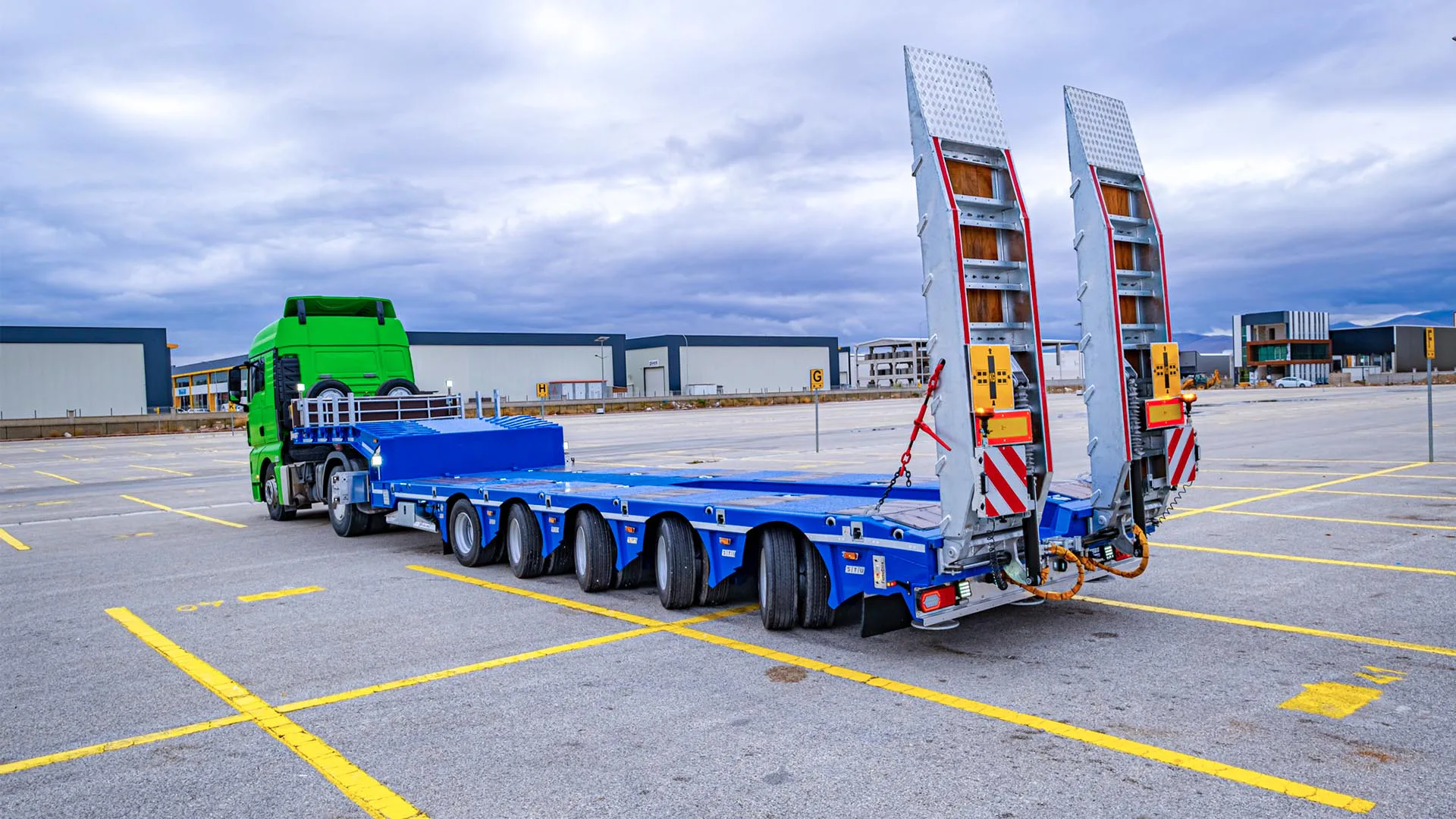
Lowbed trailers can be configured with self steering or hydraulic steering axles. The choice follows route geometry, turning requirements and operator preference.
A practical option for improved manoeuvrability and reduced tyre scrub in configurations where self steering supports the daily route profile.
Hydraulic steering can be applied where turning radius is critical, the trailer operates in challenging route geometry or axle movement needs closer control.
For different lowbeds, steering pattern should be engineered according to axle layout, chassis length, payload distribution and route permit requirements.
Correct steering selection helps reduce lateral tyre scrub and supports easier handling in yards, roundabouts, industrial zones and project sites.
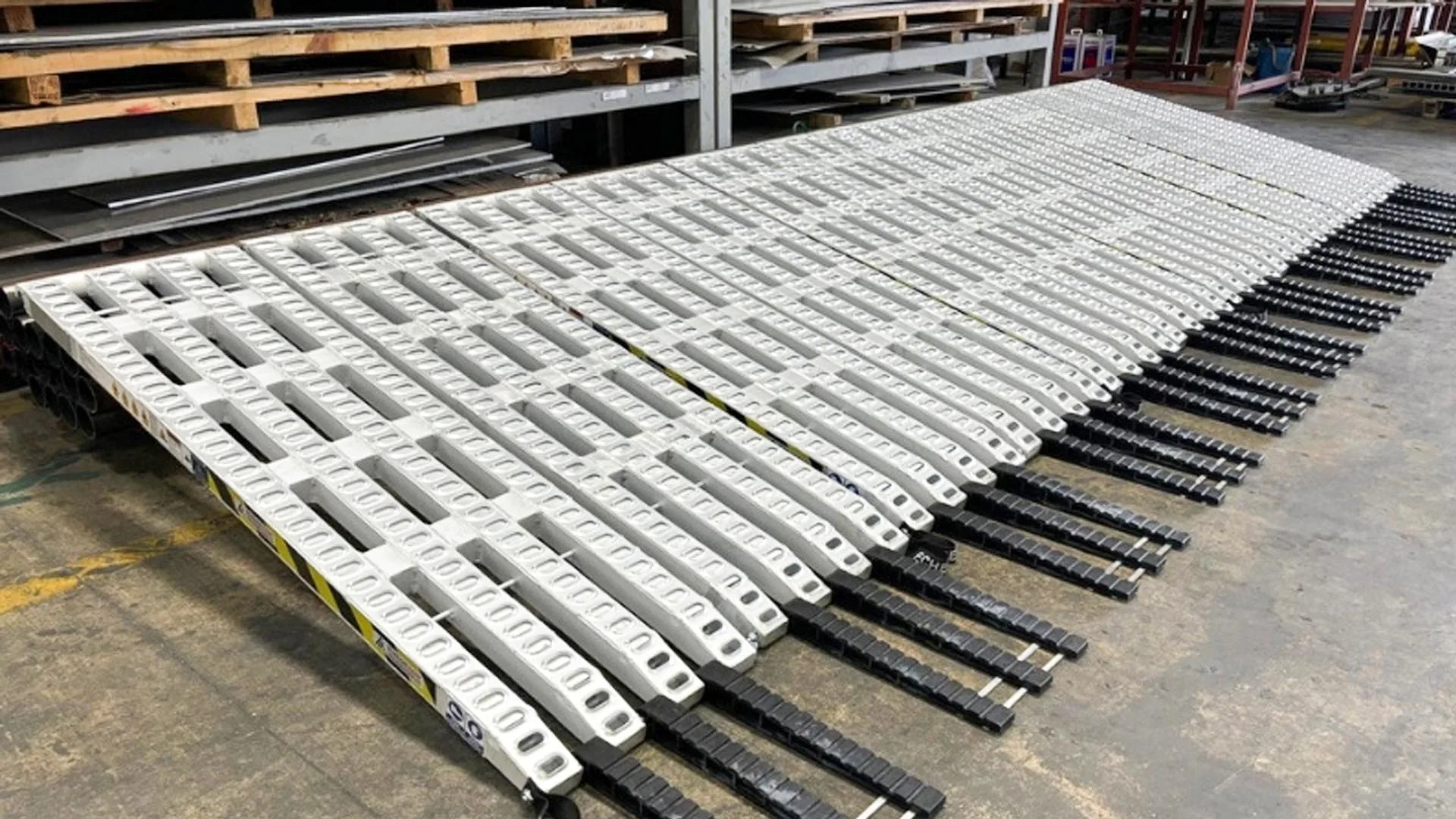
Hydraulically operated rear ramps for safe loading of tracked and wheeled equipment. Ramp type, width and angle are selected for the machine, its ground clearance and the daily loading routine, and STU can configure single piece or foldable hydraulic ramps with two sections, or aluminium ramps and access equipment, by specification.
3 Axle Lowbed Trailer
3 Axle Extendable Lowbed Trailer
4 Axle Lowbed Trailer
4 Axle Extendable Lowbed Trailer
5 Axle Lowbed Trailer
5 Axle Extendable Lowbed Trailer
6 Axle Extendable Lowbed Trailer
8 Axle Extendable Lowbed Trailer
The same option pool applies to any axle count (2 to 8) and to both fixed and extendable chassis.
In the Field
Global Reach
A lowbed trailer is used to transport heavy machinery and equipment: such as excavators, dozers, loaders, graders, and agricultural machines, where low loading height and stable road performance are required.
Yes. STU lowbed trailers can be built as fixed or extendable (telescopic) across families with 2, 3, 4, 5, 6, 7 or 8 axles. Choose a fixed chassis for daily standard loads, and an extendable chassis when cargo length varies or projects include long machines.
Choose hydraulic ramps made in one piece for fast daily loading. Choose foldable ramps when flexibility in the approach angle is important or when loading different machine types frequently.
The right width depends on local road limits and your typical machine width. Wider platforms can make loading and securing easier for wide equipment.
Passively steered axles respond to cornering forces. Hydraulic steering axles provide active steering control, often preferred for tight route geometry and reduced tyre scrub.
Yes. Hydraulic steering (hydraulic turning) axles can be configured on any lowbed axle family (2/3/4/5/6/7/8) on request.
Yes. Axle brand is selectable across all models: TRAX, GIGANT, BPW, SAF.
Lowbed and low loader describe the same trailer family in most European markets. Here are the five specifications that actually decide which unit you need, and how to write an enquiry that gets it.
Read moreAxle count is decided by the road, not by the trailer. Structural capacity tells you what a chassis can carry; national axle load limits tell you what you can legally put on it. Here is how to work out which number you actually need.
Read morePlan excavator transport using the complete combination: machine dimensions, deck height, gross weight and axle loads. Understand when route limits require authorisation and how trailer specifications affect the calculation.
Read moreTransparent pricing. No hidden costs. Engineered to your exact specifications.
Trailer Type
Lowbed Trailer
Axle Families
2, 3, 4, 5, 6, 7 or 8 axle configurations
Chassis Type
Fixed chassis or extendable telescopic chassis available.
Main Use
Heavy equipment, construction machinery, agricultural machines, industrial cargo, infrastructure equipment and oversized transport
Typical Cargo
Excavators, bulldozers, wheel loaders, graders, cranes, rollers, tractors, harvesters, drilling machines and project cargo
Chassis Steel
S355J2+N structural steel of high strength; S700MC PLUS / Strenx steel of high strength or S960 Steel Grades
Platform Width
Common width options include 2,550 mm or 2,750 mm or 3,000 mm or more.
Ramp Type
Hydraulic ramps made in one piece, foldable hydraulic ramps
Axle Brands
TRAX / GIGANT / BPW / SAF options according to service network and configuration
Suspension
Air suspension or mechanical leaf spring suspension
Steering
Passive steering or hydraulic steering solutions
Braking System
ABS / EBS options according to market requirements with Wabco or Knorr Bremse brands
Tyres
Pirelli Bridgestone, Continental, Lassa, Starmaxx and others
Electrical System
ASPÖCK Brand 24V electrical system with LED lighting package
Hydraulics & Control
Electrohydraulic power pack options, radio remote control, hydraulic landing gear and hydraulic steering options by specification
Surface Protection
Coating, Zinc Coating, Painting in two layers
Optional Equipment
Toolboxes, widening boards, lashing rings, ferry rings, lifting axle, warning panels, spare wheel carrier, winch, support profile storage and bespoke equipment