What is a low loader trailer used for?
A low loader trailer is used to transport heavy and oversized machinery where very low deck height and stable road behaviour are required: construction equipment, industrial machines, and project cargo.
Hydraulic Axle Steering | Fixed or Extendable | Heavy Equipment Transport
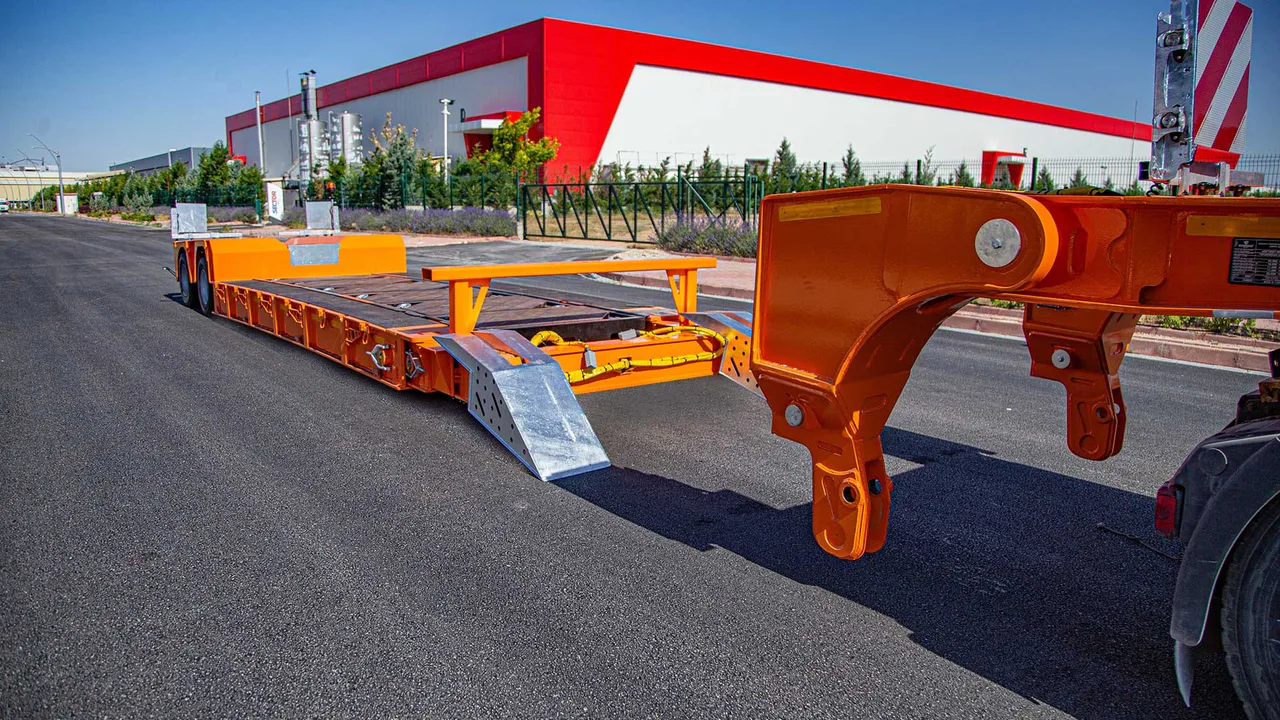
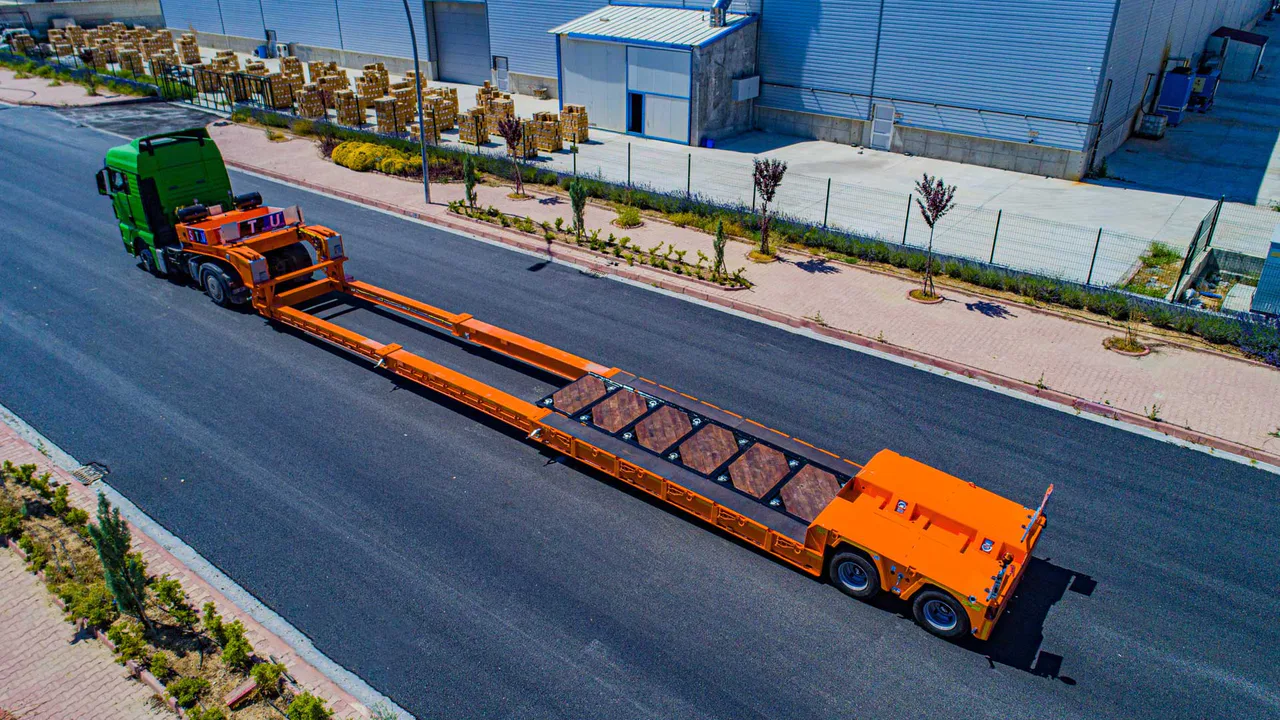
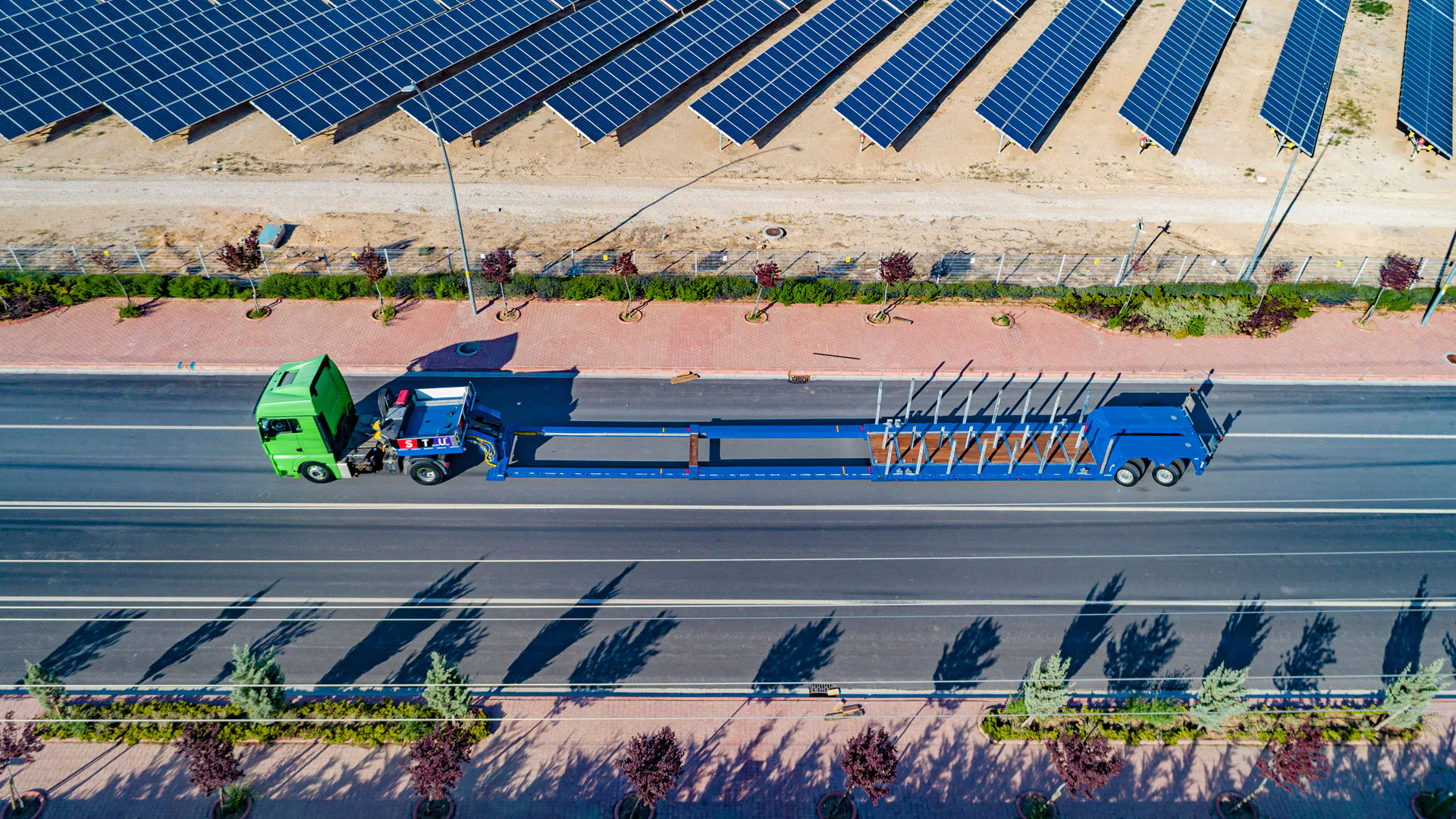
STU Hydraulic Steering Low Loaders are produced for heavy equipment and oversized cargo transport where low loading height, stable road behaviour and precise manoeuvring are critical. Hydraulic axle steering helps the trailer follow the tractor more predictably in tight construction sites, roundabouts, narrow industrial entrances, port terminals and escorted project routes. Available as fixed or extendable semi low loader configurations, each trailer is engineered around cargo dimensions, axle logic, route limits and market requirements.
Swipe to browse
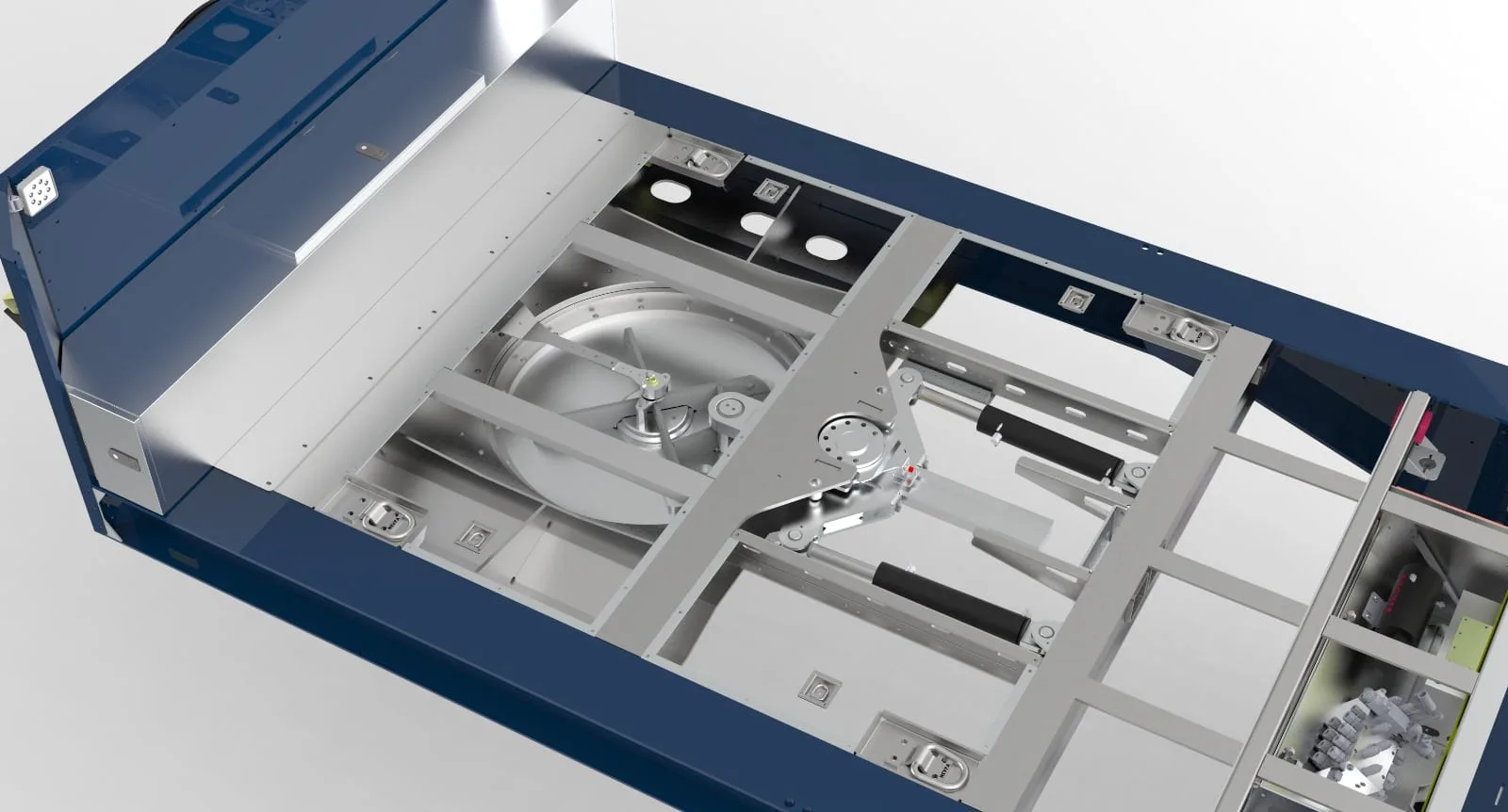
Hydraulic steering gives the low loader active axle control during manoeuvring. It is preferred when long combinations, reversing, narrow entrances, roundabouts, port terminals and construction sites require more steering precision than a trailer with fixed axles or passive steering.
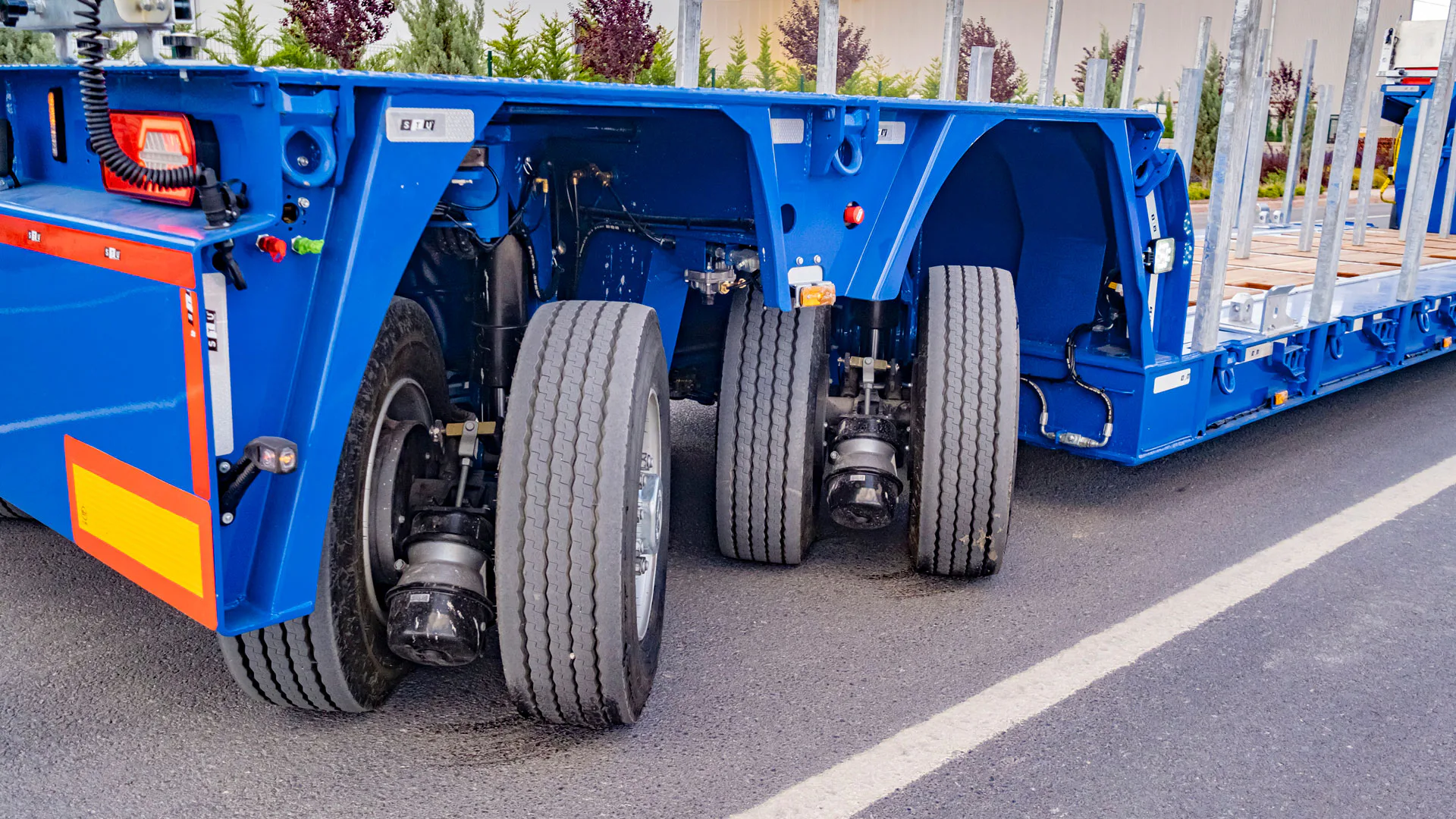
Hydraulic steering axles improve turning behaviour on long low loader combinations and help the trailer follow the tractor more predictably.
Controlled axle geometry helps limit lateral tyre scrub during turns at low speed, supporting tyre life and stable tracking.
Hydraulic steering supports more controlled reversing in yards, depots, industrial zones and restricted delivery points.
Useful for narrow roads, roundabouts, escorted routes, port terminals and difficult construction site access.
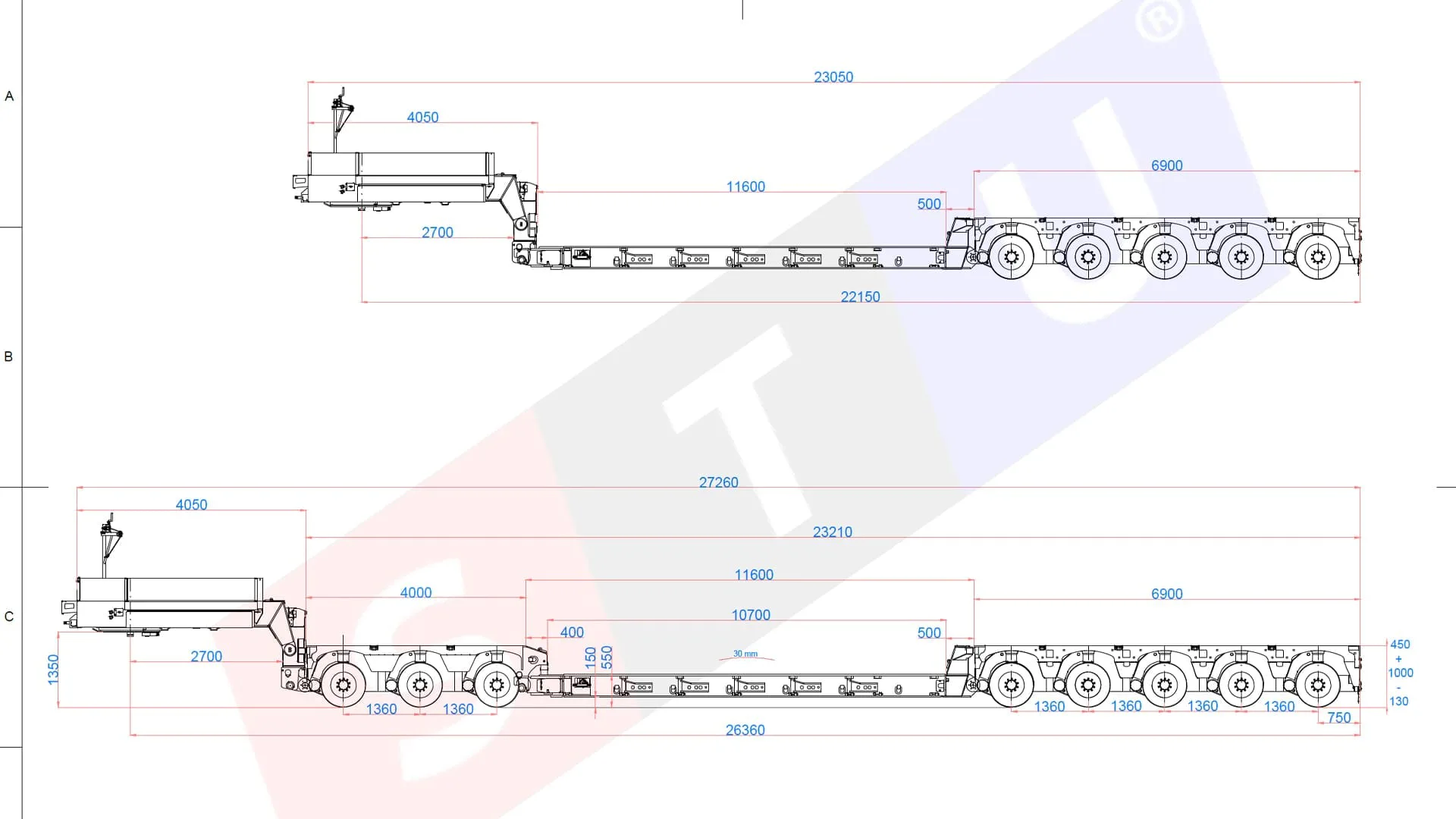
STU hydraulic steering low loaders can be evaluated from compact formats with 2 axles to heavy multi axle and modular project configurations. Fixed or extendable chassis logic is selected according to cargo length, machine weight, legal axle limits, bridge rules, route permits and destination market requirements.
A compact format for regular heavy equipment transport on wider routes where simple ownership and low loading height are priorities.
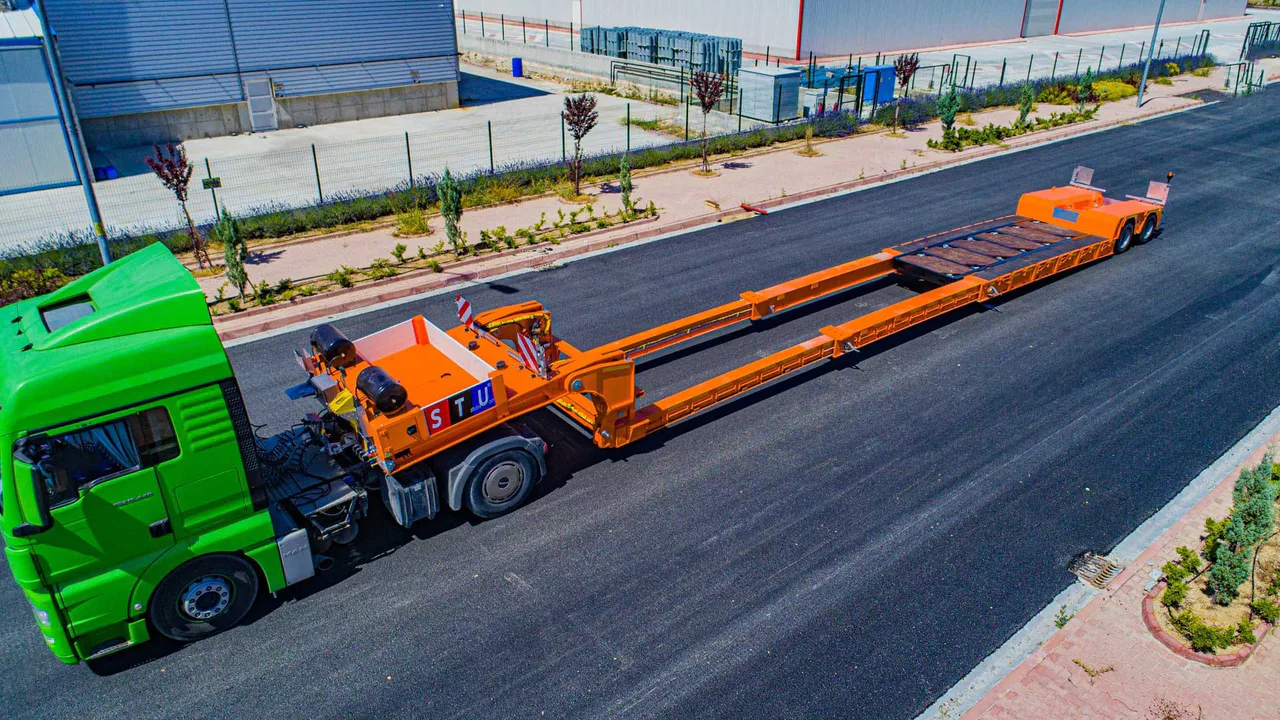
For long machines and variable cargo length where an extendable chassis and controlled steering behaviour improve route practicality.
A versatile heavy machinery transport format for construction equipment, industrial cargo and more demanding access points.
Best for oversized and long equipment, and constrained logistics requiring precise turning. A configuration adapted to the project where controlled steering is essential.
Best for demanding projects, long cargo, and challenging route geometry. Built for demanding heavy transport planning where both stability and steering control are required.
For the most demanding oversized transport projects: 2+4, 2+5, 3+5, and other bespoke combinations. Typically use pendular axle lines, hydraulic steering, and hydraulic suspension logic for difficult routes.
For demanding oversized cargo projects where axle footprint, deck length and route compliance must be evaluated carefully.
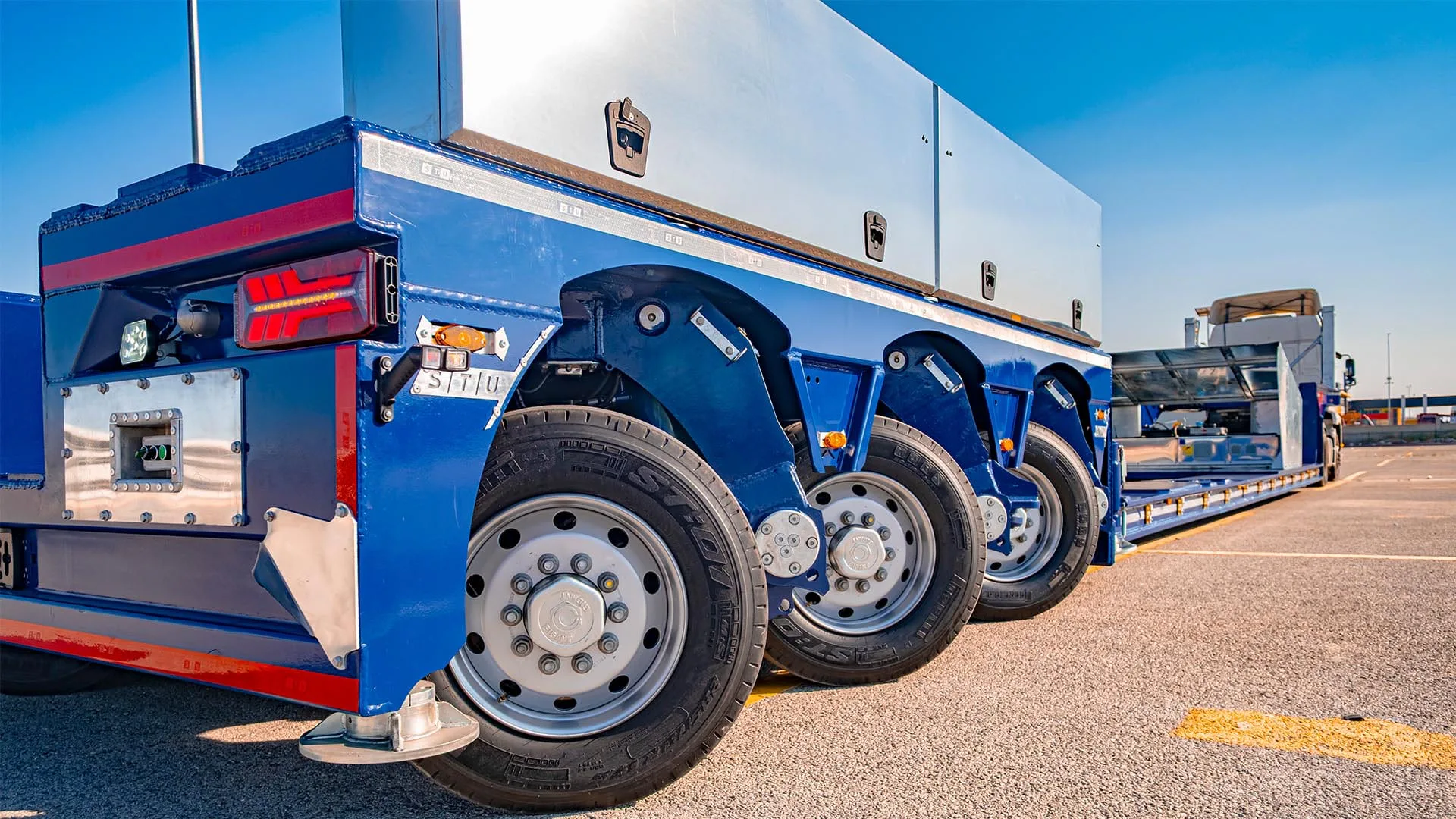
Hydraulic steering becomes important when trailer length, cargo weight, turning radius, route restrictions or reversing needs make fixed axles or passive steering insufficient. It is especially useful on extendable low loaders and multi axle semi low loader configurations.
When the chassis extends for long cargo, controlled steering helps keep manoeuvring predictable across different deck lengths.
As axle count increases, hydraulic steering helps control tyre scrub and turning behaviour during manoeuvres at low speed.
Useful where entrances are narrow, ground conditions are difficult and loading areas leave limited turning space.
Supports controlled movement around warehouses, ports, factories, terminals and restricted delivery points.
2+4, 2+5, 3+5, and other bespoke combinations, hydraulic steering and hydraulic suspension logic control load distribution on difficult routes.
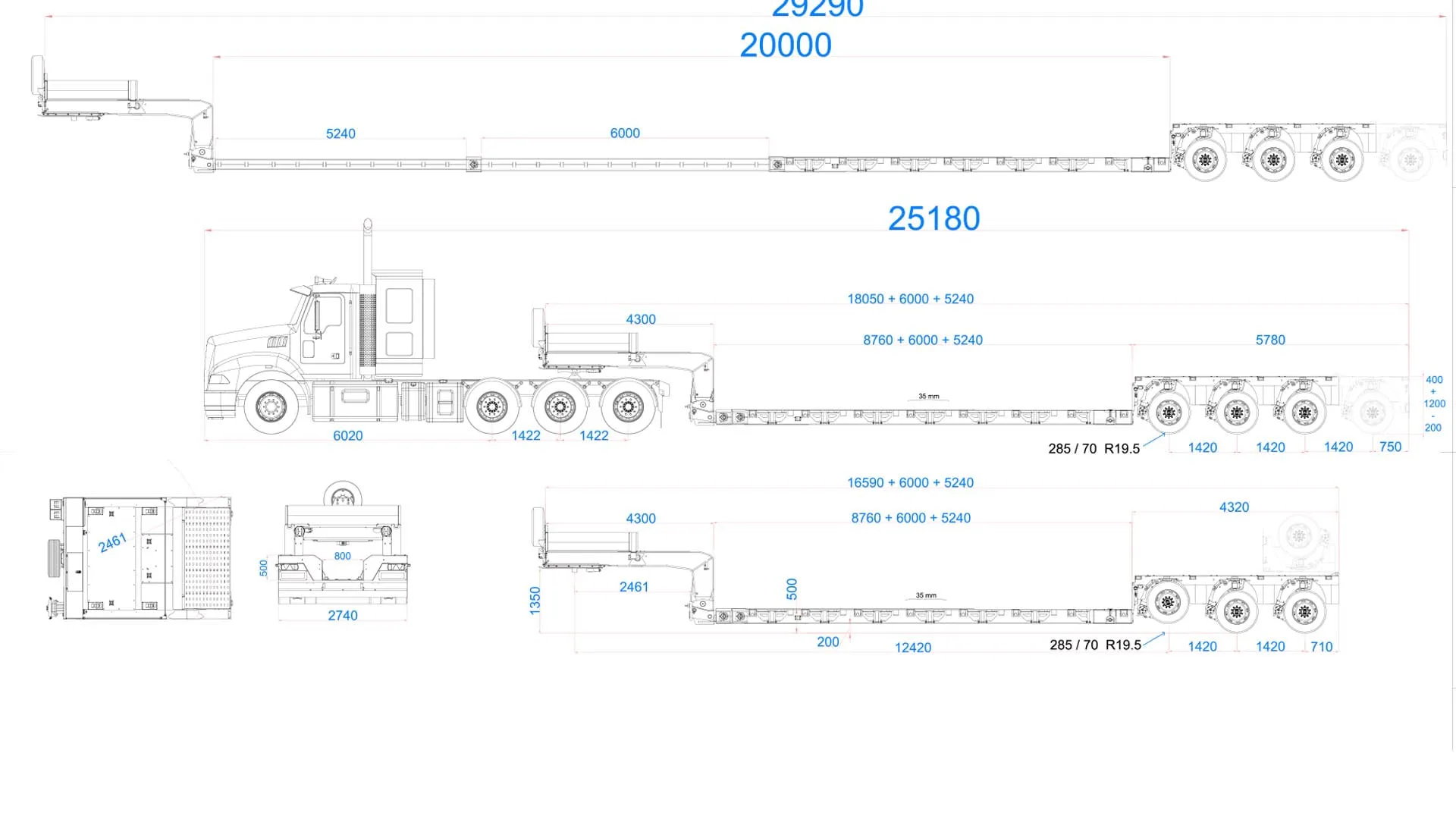
STU is a semi trailer producer from Türkiye. Each hydraulic steering low loader is configured around the cargo, route, axle plan, steering system, deck structure, ramp solution, suspension type, component brands, surface protection and destination market requirements.
S355J2+N or S700MC PLUS or 960F can be evaluated according to strength, weight optimisation and project requirements from SSAB.
Axle brand is selectable across all models to match your service network and spare parts availability.
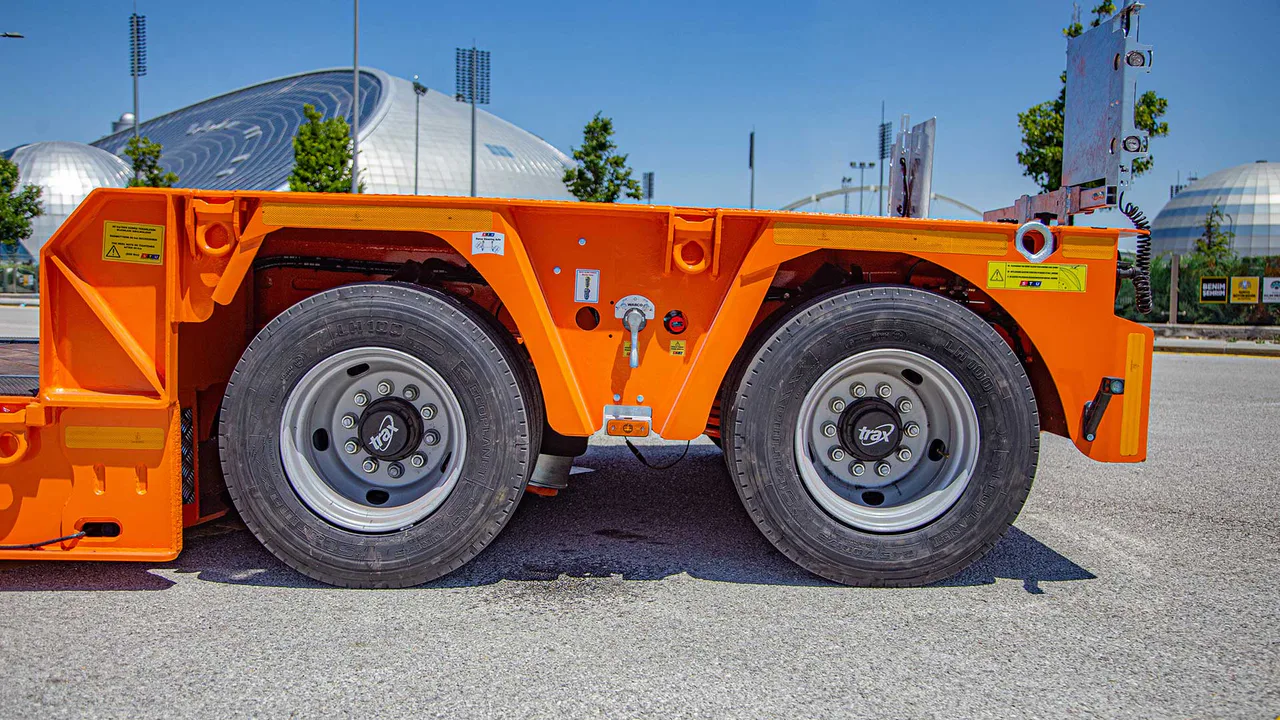
TRAX, GIGANT, BPW and SAF options can be matched to service network, spare parts availability and axle logic.
Hydraulics, landing gear, brakes, tyres, lighting and safety equipment can be selected according to market needs.
RAL colour, corrosion protection, lighting, markings and safety details can be adapted for international operation.
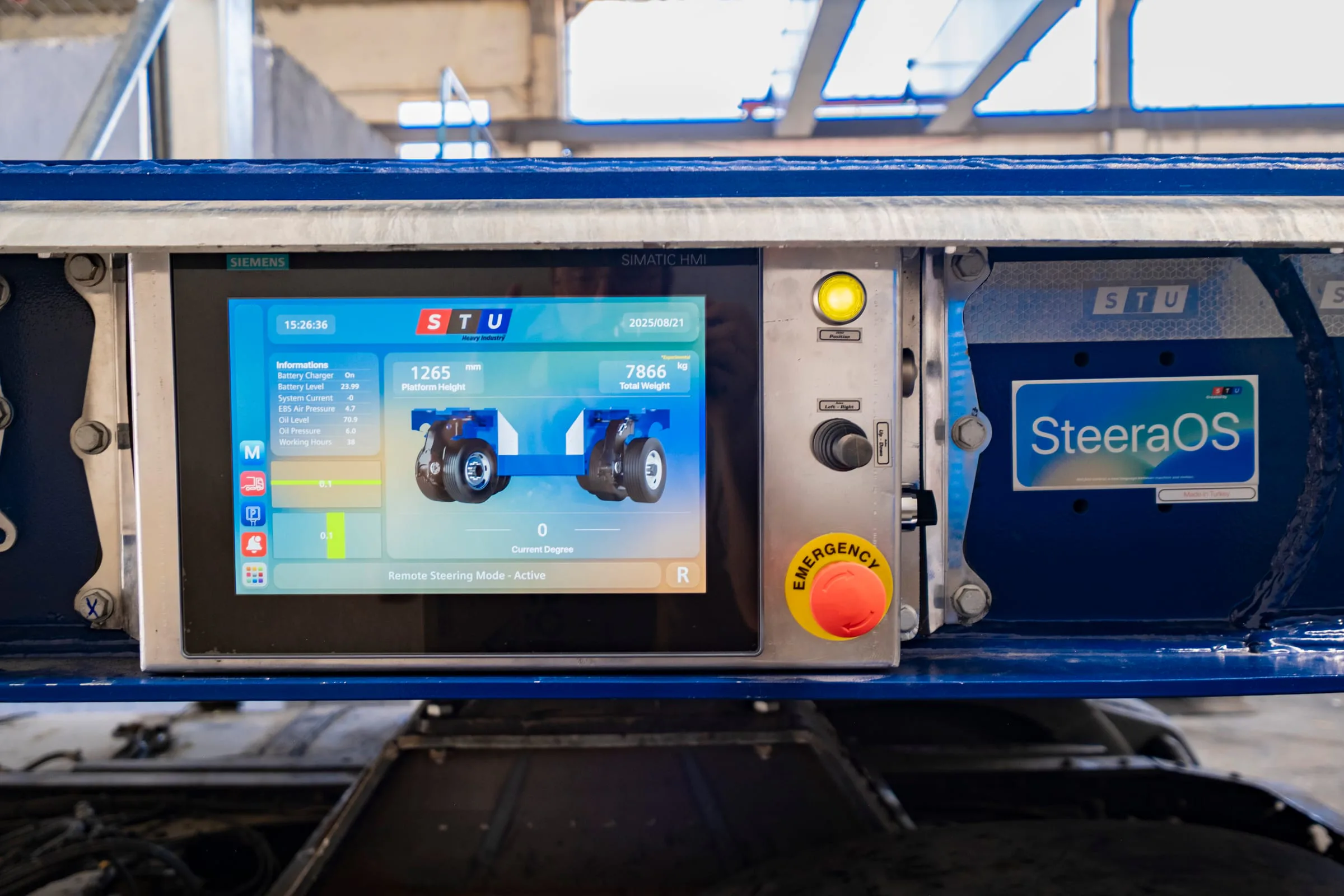
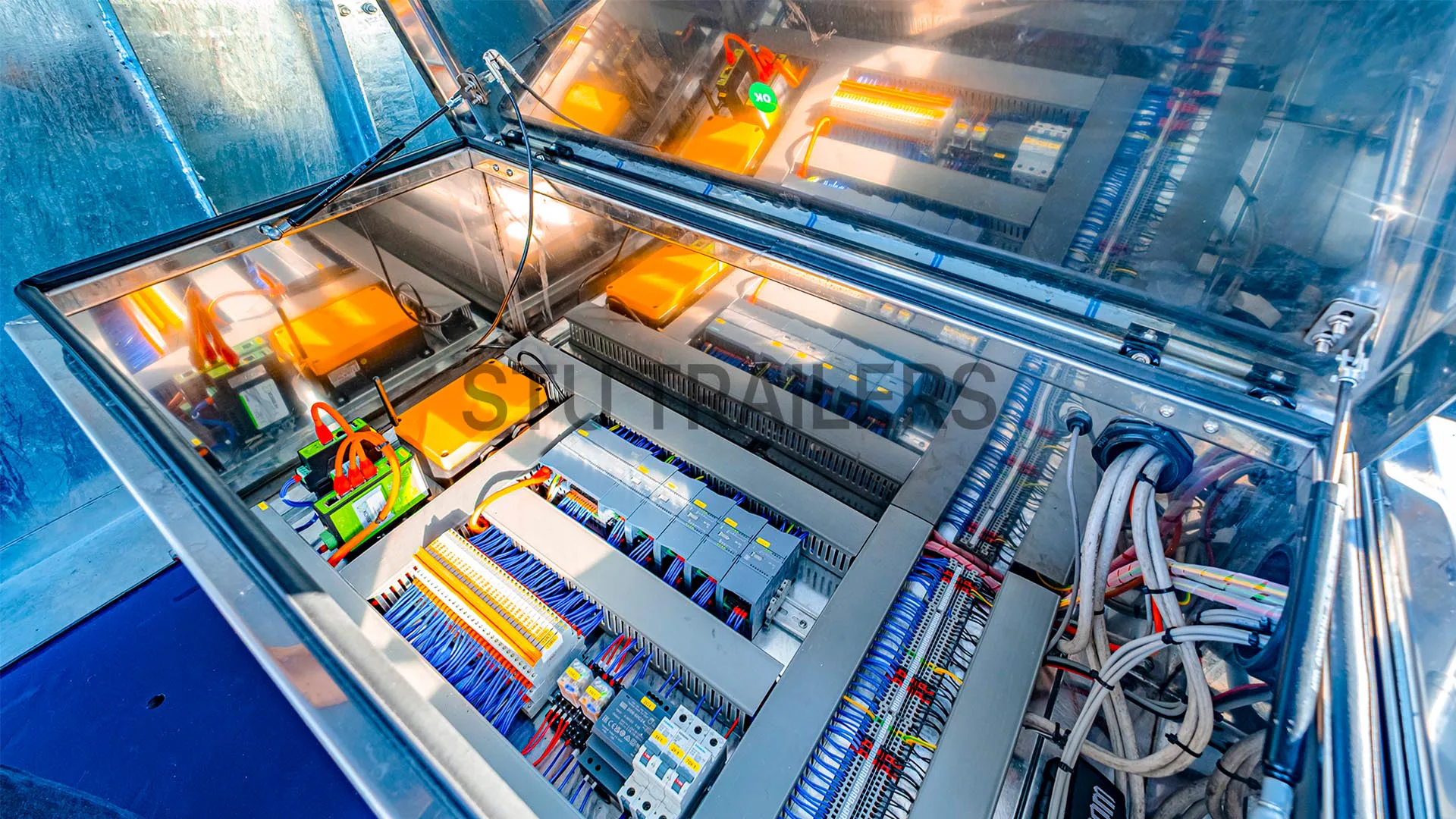
The operating system on the trailer that drives every STU hydraulic steering low loader. An industrial Siemens HMI on the chassis gives the operator live control of axle steering, suspension, alarms and diagnostics from a single ruggedised panel.
SteeraOS opens with a start screen bearing the brand that initiates ECU handshake, sensor self check and PLC link before any axle, suspension or steering input is accepted. The operator sees that the trailer is ready to move, which prevents accidental hydraulic action during setup before departure.
The home dashboard shows ECU Health, System Health, Oil Level, Battery Level, Sensors Check, Oil Pressure, Working Hours, Platform Height, Total Weight and the current steering angle in real time. A 3D axle visualization mirrors actual axle position so the driver always sees what the trailer is doing without leaving the cab area.
Settings, Diagnostics, Calibration, Remote Control, Data Logs, Remote Connection, Alarms, Alarm History, Coupling Mode, PLC Signals, Services, Park Mode, Maintenance, Manual Mode, Bleeding Mode and Test Mode are organised as touch icons on a single screen. Operators do not need to navigate menu trees to reach the function they actually use on site.
Manual Mode is activated when the wireless remote is unavailable or when the operator wants direct touchscreen control. Axle direction (R/L), suspension level and platform position can be moved from the panel, with shortcuts activated with one touch for Zero Position, Ride Position and Straight Position to recover known geometry quickly.
SteeraOS pairs with a wireless remote for industrial use so the operator can walk alongside the trailer during tight manoeuvres, ramp loading or precise positioning under a load. The Remote Connection screen confirms link status, and tutorials on the screen show button mapping for steering direction, axle up/down and platform height.
Park Mode locks axles in a defined parking geometry and stabilises suspension; Coupling Mode prepares deck height and kingpin alignment for tractor coupling. Both modes display large, unmissable safety warnings before any axle moves, reducing operator and equipment risk in the yard or at the loading site.
Bleeding Mode walks the technician through cycles for removing air for the hydraulic steering circuit; Test Mode actuates each axle, valve and sensor in sequence to confirm the system is healthy after build, rebuild or extended storage. Together they form a repeatable commissioning protocol for new and serviced trailers.
An integrated diagnostic suite shows live PLC signal states, the angle of every steered axle and the status of valves and switches. Service teams can identify a stuck valve, a noisy sensor or a cabling fault directly on the trailer without external software, which is decisive when the trailer is on a project site far from the workshop.
Active alarms are surfaced on the main screen with priority colour coding; Alarm History keeps a timestamped record so operators and service partners can reconstruct what happened. Data Logs export operating hours, alarm counts and event traces for fleet management, route audits and warranty cases.
Drive Mode, Suspension Mode, Battery, Screen and General settings can be tuned per operator and per route; Maintenance surfaces service reminders based on operating hours and condition. When deeper support is needed, authorised STU service can connect remotely to read live PLC data, review alarms and assist with calibration, reducing downtime on international project transports across Europe.
Hydraulic Steering Axle Layout
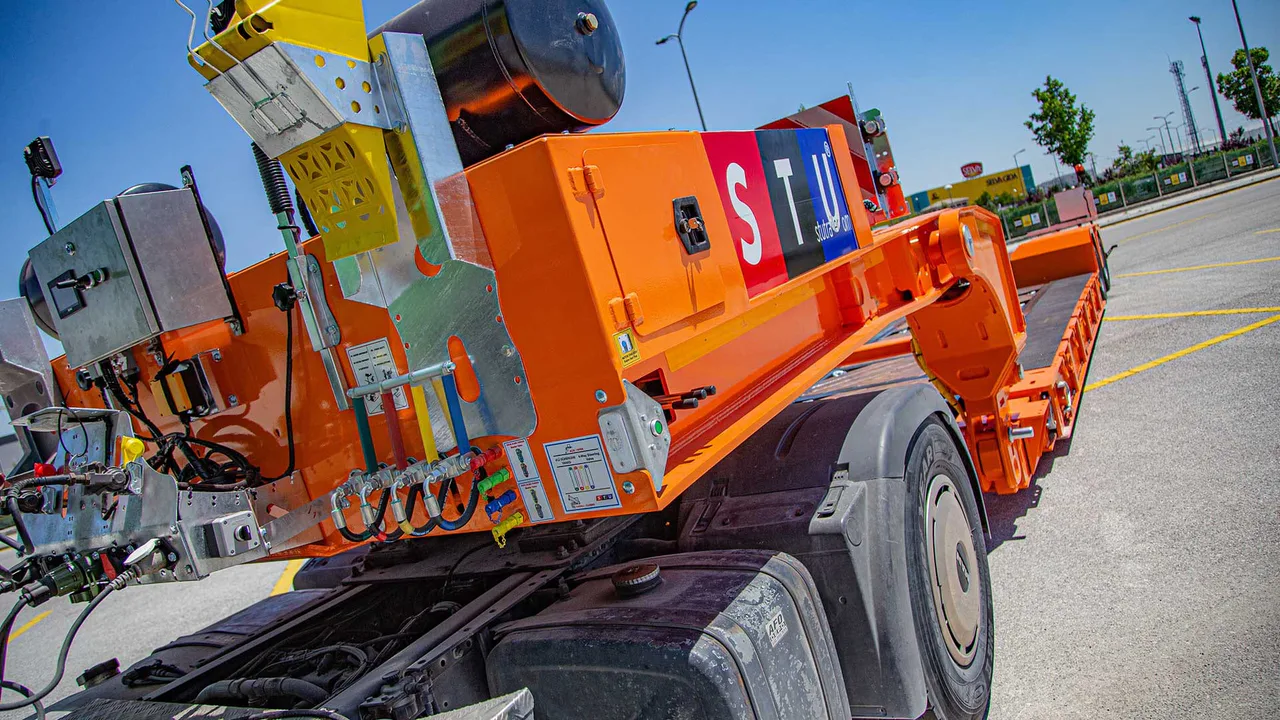
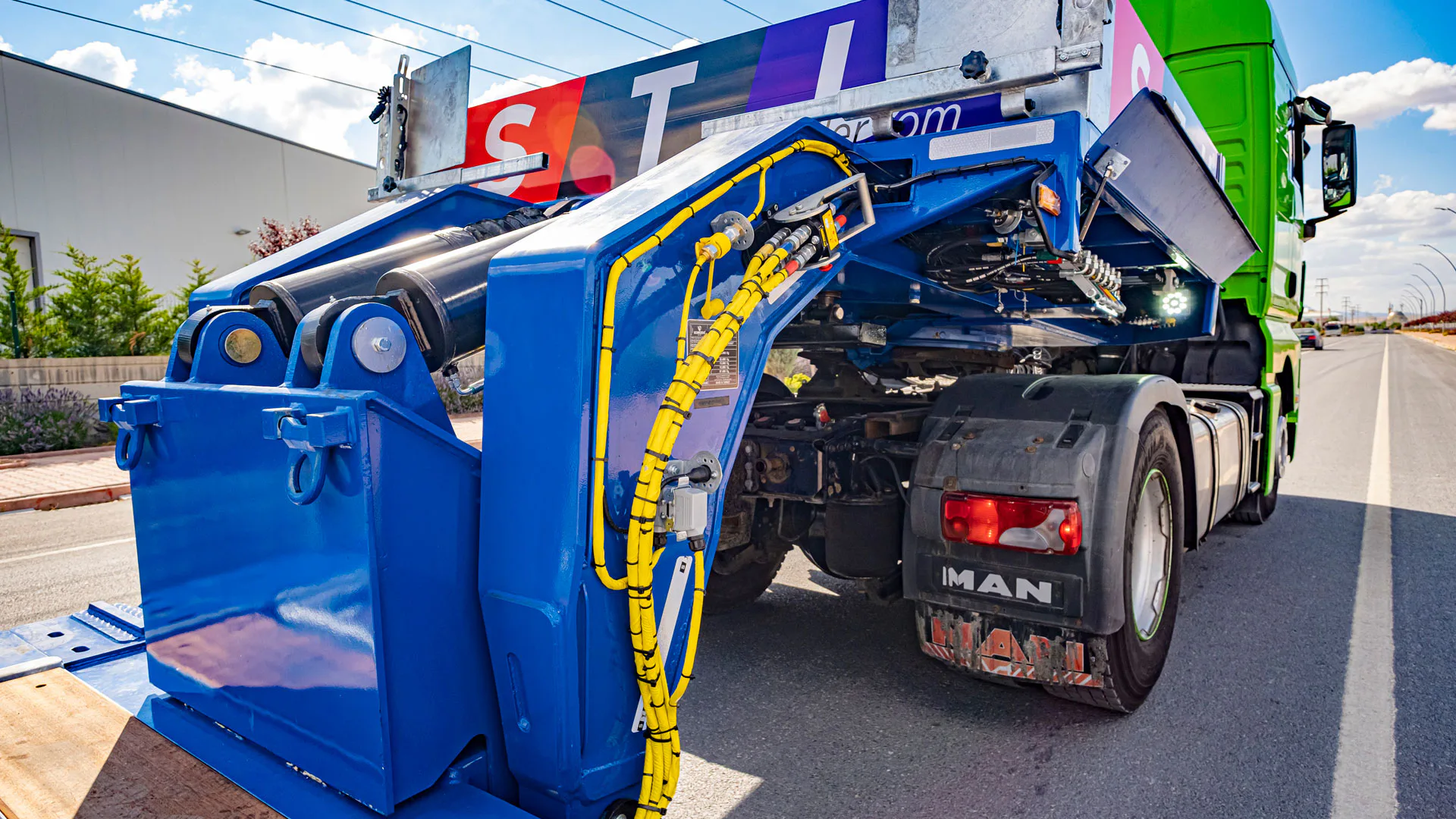
Gooseneck and Hydraulic Control Area
Extendable Low Loader Platform
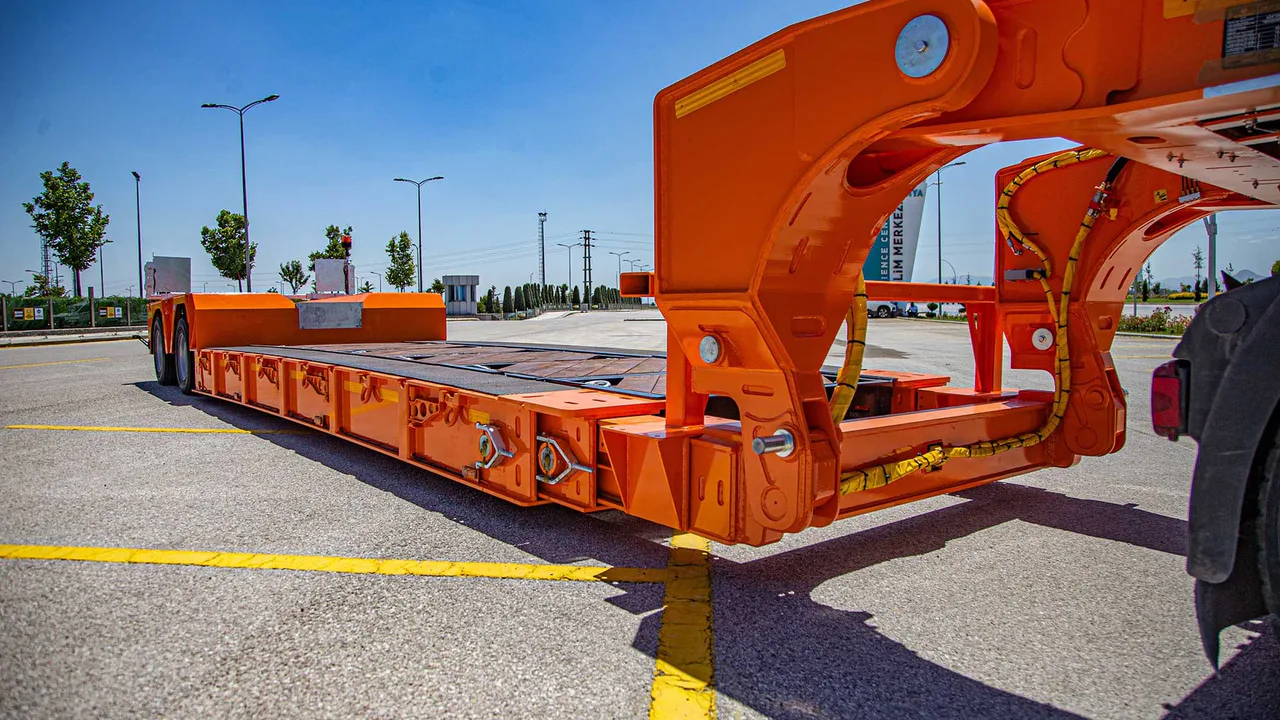
Gooseneck and Steering Transfer
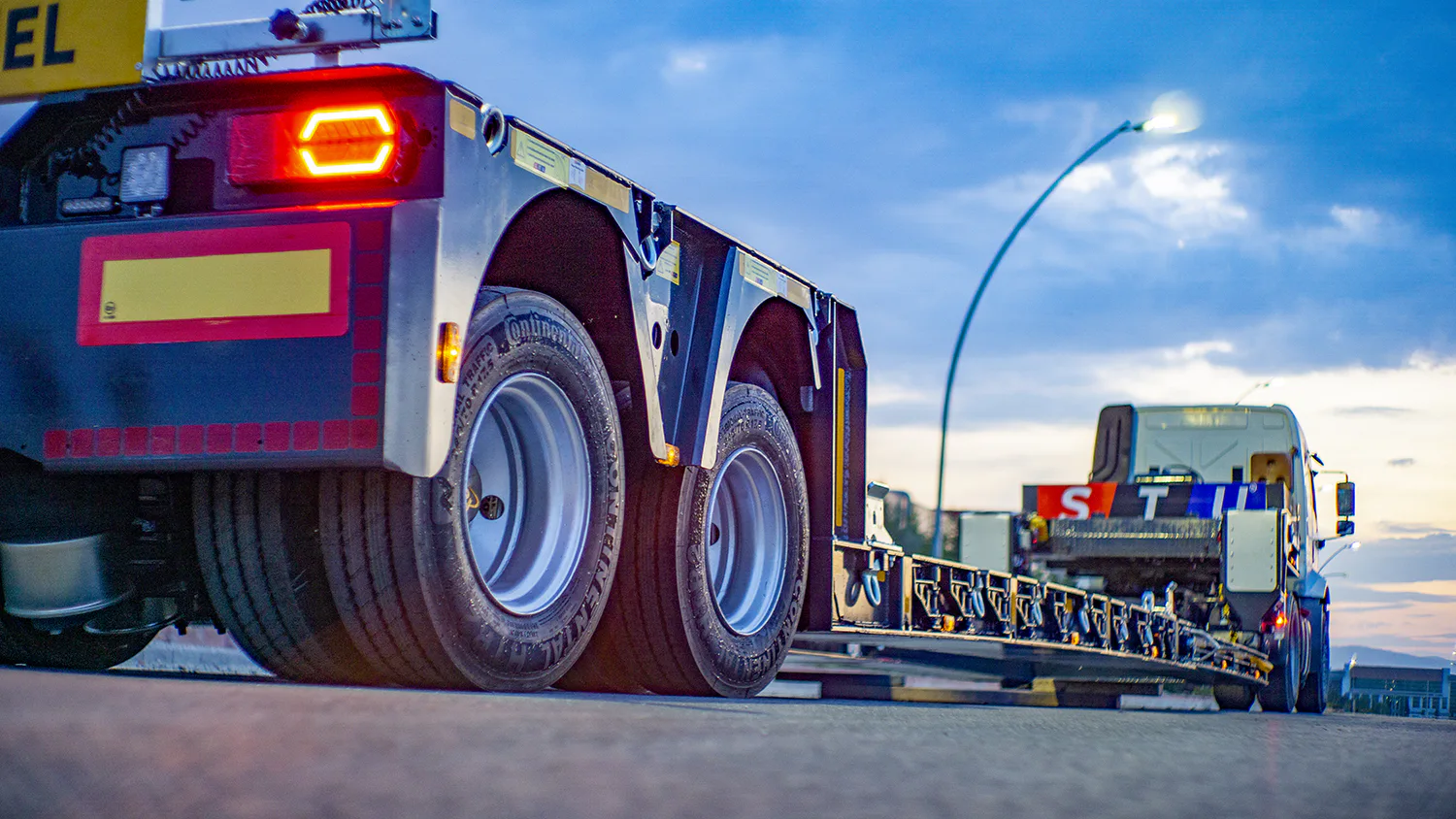
Heavy Transport Rear Axle Group
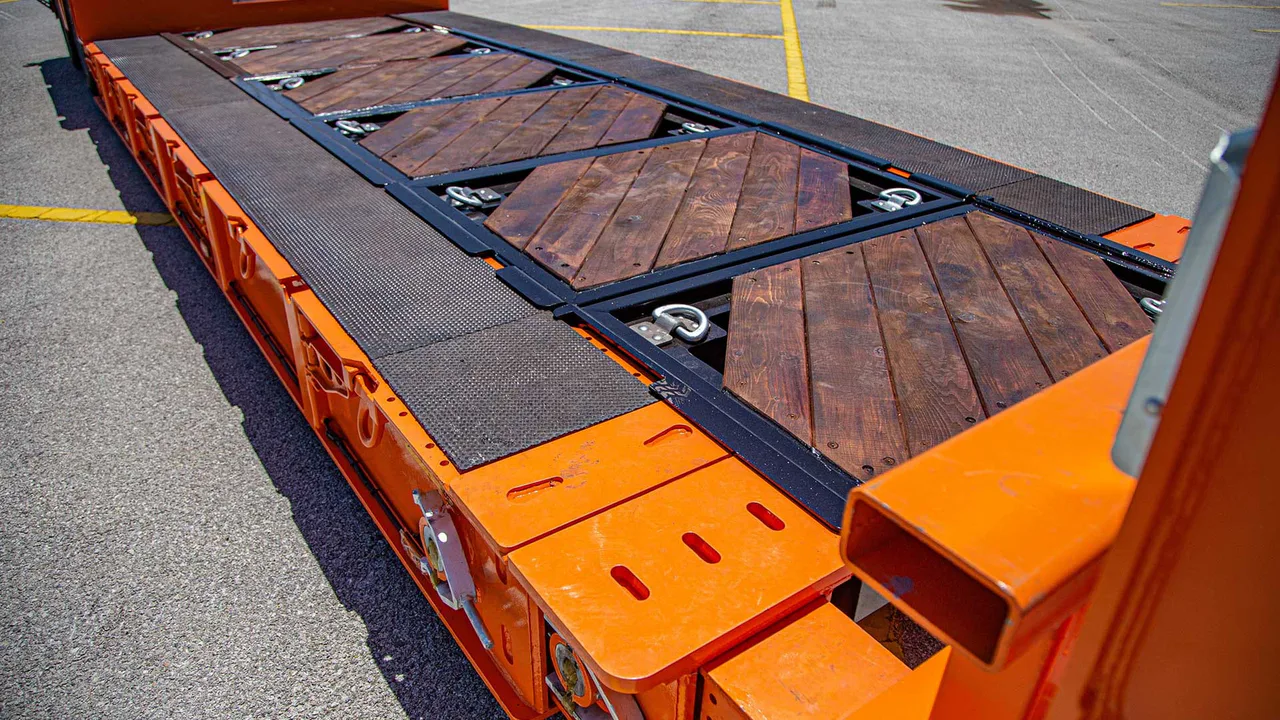
Loading Deck and Ramp Interface
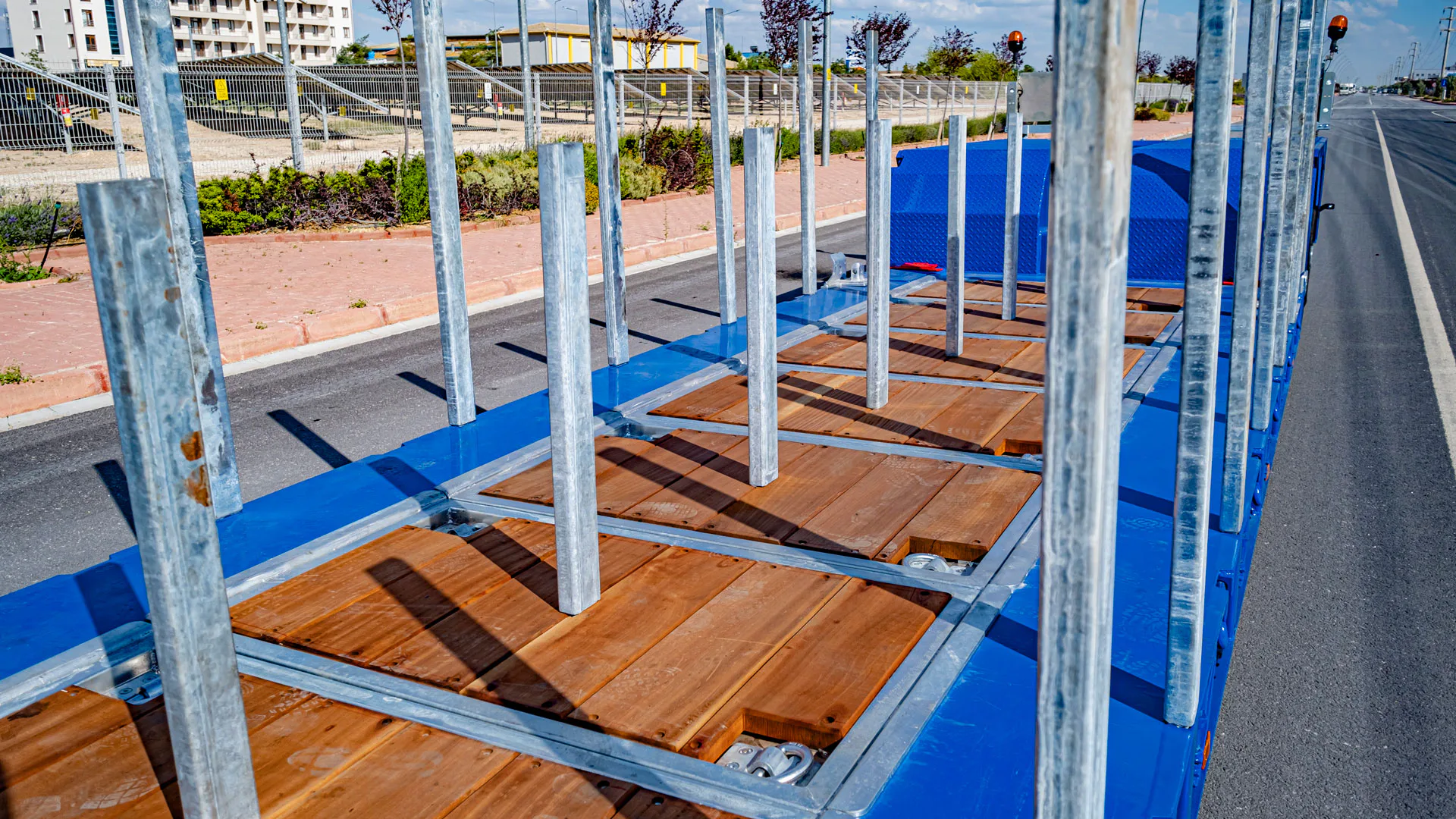
Deck Surface and Cargo Support
Options can be configured depending on model, axle count, route requirements and project needs.
In the Field
Global Reach
A low loader trailer is used to transport heavy and oversized machinery where very low deck height and stable road behaviour are required: construction equipment, industrial machines, and project cargo.
Yes. In most low loader configurations, hydraulic steering axles are the standard expectation for predictable turning behaviour and reduced tyre scrub.
It is not mandatory in this one configuration, but most customers still prefer hydraulic steering for easier manoeuvring and reduced tyre wear.
Yes. Extendable configurations are available and typically paired with hydraulic steering for controlled handling.
Yes. Modular pendular axle configurations are available by project specification, depending on route and cargo requirements.
Yes. Axle brands are selectable on all projects: TRAX, GIGANT, BPW, SAF.
Lowbed and low loader describe the same trailer family in most European markets. Here are the five specifications that actually decide which unit you need, and how to write an enquiry that gets it.
Read moreAxle count is decided by the road, not by the trailer. Structural capacity tells you what a chassis can carry; national axle load limits tell you what you can legally put on it. Here is how to work out which number you actually need.
Read morePlan excavator transport using the complete combination: machine dimensions, deck height, gross weight and axle loads. Understand when route limits require authorisation and how trailer specifications affect the calculation.
Read moreTransparent pricing. No hidden costs. Built exactly to your specifications.
Load Capacity
80 to 150 tonnes depending on configuration, axle plan, permits and engineering review
Chassis Steel
S355J2+N / S700MC PLUS / 960 Plus (SSAB) by specification
Steering
Hydraulic axle steering for controlled turning and reduced tyre scrub
Extension
Fixed or telescopic extendable platform
Axle Configurations
2 to 8 axles + modular / pendular axle lines by project
Modular Options
2+4, 2+5, 3+5 and bespoke pendular combinations
Axle Brands
TRAX / GIGANT / BPW / SAF according to service network
Gooseneck
Fixed or mostly detachable; hydraulically operated by specification